
In the US, most homes are not built with concrete or brick interior walls. They are built with wood-frame construction, often called stick framing. That means your door products must fit wood stud walls, drywall finishes, and common installer habits.
US house construction should be treated as a product engineering issue. If you design for the wrong wall system, your product may look good in a catalog but become hard to install on a real American jobsite.
Why Wood-Frame Construction Defines the US Housing Market
The first thing you should know is: wood stud walls are the standard in most American residential projects. This shapes everything around interior doors.
Wood-Stud Framing Is the Main System in US Homes
In many parts of Europe and Asia, interior walls are often made with masonry, concrete, or metal framing systems. In the US, most homes use timber studs, usually spaced in repeating structural patterns, then finished with drywall.
The wall cavity itself is part of the design logic. Installers expect door frames, casing, and hardware to work with wood studs and drywall, not solid masonry openings.
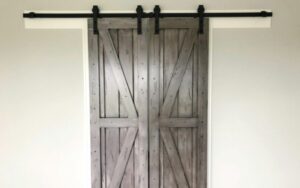
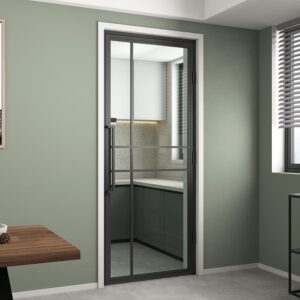
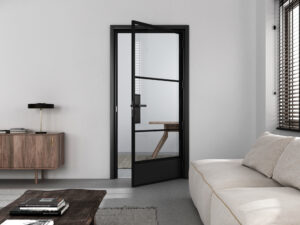
This also affects door trends. In US homes, products that work well with stud walls, such as:
- pre-hung hinged doors
- barn doors
- pocket doors
- steel glass interior doors
- sliding hardware systems
are easier to position and install when they match standard wood-frame construction.
“2×4” and “2×6” Are Nominal Sizes, Not Actual Sizes
This is one of the most important facts for your engineering team. In the US, builders use nominal lumber sizes. The name sounds simple, but the real size is smaller.
Here are the actual dimensions you should design around:
| Stud Type | Nominal Size | Actual Size | Approx. Metric Size |
| Standard stud | 2×4 | 1.5″ x 3.5″ | 38 mm x 89 mm |
| Deeper stud | 2×6 | 1.5″ x 5.5″ | 38 mm x 140 mm |
If you design a frame using only the nominal number, you will make the wrong product. A “2×4 wall” is not 4 inches deep in wood. The actual stud depth is 3.5 inches. That difference matters because your jamb must match the finished wall thickness, not the name of the lumber.
Drywall Completes the Real Wall Thickness
In US houses, drywall is usually installed on both sides of the stud wall. The common drywall thickness is 1/2 inch, though 5/8 inch is also used in some fire-rated or better sound-control walls.
That means the finished wall is deeper than the stud itself. This is where many overseas suppliers make mistakes. They design door frames to match the wood only, or they use convenient metric sizes like 100 mm or 150 mm. US builders do not want that. They want the door jamb to line up with the full finished wall.
How US Wall Construction Affects Door and Frame Design
If you want your doors to fit the US market, you need to engineer them around standard wall builds.

The Most Important Target Is Finished Wall Thickness
For interior doors, the key measurement is often the jamb depth. This should match the full wall thickness after drywall is added.
Below is the practical guide your team should use:
| Wall Type | Wood Stud Thickness | Drywall Side A | Drywall Side B | Total Finished Wall Thickness | Recommended Frame Depth |
| Standard 2×4 wall | 3.5″ | 1/2″ | 1/2″ | 4.5″ | 4-1/2″ |
| Heavy-duty 2×4 wall | 3.5″ | 5/8″ | 5/8″ | 4.75″ | 4-3/4″ |
| Standard 2×6 wall | 5.5″ | 1/2″ | 1/2″ | 6.5″ | 6-1/2″ |
This table tells you what frame sizes you should standardize for the US market.
If you want to make your catalog more useful to American buyers, your main target depths should be:
- 4-1/2 inches for standard interior stud walls
- 6-1/2 inches for thicker walls
- and in some cases 4-3/4 inches for upgraded 2×4 wall assemblies
Pre-Hung Swing Doors Need US-Standard Jamb Depths
If you sell hinged steel glass doors or other pre-hung door systems, your frame should fit the wall without forcing the installer to improvise. In the US, installers prefer a frame that sits properly with drywall and allows clean trim finishing.
For most standard room-divider applications, a 4-1/2 inch jamb depth is the safest and most common option. If the opening is built with a 2×6 wall, then 6-1/2 inches becomes the right choice.
This is one of the easiest ways to make your product more attractive. You do not need to redesign the whole door. You need to offer the right US-ready frame depths.
Pocket Doors Are a Strong Opportunity in the US
Pocket doors are especially important in the American market because they save floor space. That makes them popular in:
- bathrooms
- closets
- laundry areas
- home offices
- smaller bedrooms
- open-plan interiors
If you already sell sliding door hardware and pocket door systems, this is a natural growth area for you. But the product must be built around US wall construction.
So if you want to create a pocket door frame kit for the US:
- The structural pocket frame should fit the 3.5-inch stud depth
- The system should support drywall attachment
- The track and hardware should work inside the stud wall
- The finished result should align with a 4-1/2 inch completed wall
What US Builders and Installers Expect From Door Suppliers
You also need to understand how American installers work on site.
Your Fastening Method Should Match Wood-Stud Installation
American contractors often install frames into spruce, pine, or fir wood studs. That means your product should be ready for wood-screw fastening, not only universal anchors.
A better US-ready frame should include:
- pre-drilled holes
- countersunk fixing points
- support for #8 or #10 wood screws
- clear installation instructions in inches
- matching screws and anchors inside the hardware box
This may seem like a small detail, but it improves the installer experience. It also reduces questions, delays, and field modifications.
Avoid Random Metric Depths for the US Market
One of the biggest mistakes is offering frame depths like 100 mm or 150 mm as standard for the US interior market. These sizes may seem neat in manufacturing, but they do not match real American wall builds.
US buyers want products that fit standard construction without extra fillers or trimming. If your frame is too shallow, it will not cover the wall. If it is too deep, it will project past the drywall line and create finishing problems.
A simple rule for your engineering team is this:
| Market Need | Better Design Choice | Poor Design Choice |
| Standard US stud wall | 4-1/2″ jamb depth | 100 mm frame |
| Thick US stud wall | 6-1/2″ jamb depth | 150 mm frame |
| Pocket door cavity | 3.5″ structural pocket frame | Non-standard metric cavity design |
Product Engineering Should Follow Real Jobsite Use
The strongest suppliers sell a solution that fits the way builders actually work.
For the US market, that means you should think about:
- common stud sizes
- drywall thickness
- trim alignment
- easy screw fastening
- pre-hung frame depth options
- pocket door compatibility
- clear installation support
Partner with Tengyu for US-Ready Door Solutions
At Tengyu, we have a wide range of interior door solutions, including sliding barn doors, pocket door systems, steel glass interior doors, and door hardware designed for modern project needs. If you are looking to grow your business in the US market, we can support you with products that combine strong design, practical function, and market-ready customization.
Contact Tengyu to discuss door and hardware solutions tailored to American wall structures, installation habits, and interior design trends.
Frequently Asked Questions
Why are 2×4 walls so important in the US?
Because they are the most common wall structure in American residential construction. If your door frame does not fit a standard 2×4 wall build, it may not install cleanly.
What is the real size of a 2×4 stud?
The actual size is 1.5 inches by 3.5 inches, not 2 inches by 4 inches.
What is the most common finished wall thickness in US interiors?
For a standard 2×4 wall with 1/2-inch drywall on both sides, the total finished thickness is 4-1/2 inches.
What frame depth should you offer for standard US interior doors?
You should strongly consider 4-1/2 inch jamb depth as a core standard, because it matches the most common finished 2×4 wall.
What frame depth should you offer for thicker walls?
A 6-1/2 inch jamb depth is a key option for standard 2×6 wall construction.
Why are pocket doors popular in the US?
They save floor space and work well in compact rooms. They are common in bathrooms, closets, and flexible interior layouts.
Should you use metric sizes like 100 mm or 150 mm for the US market?
Not as your main standard. It is better to design around 4-1/2 inch and 6-1/2 inch wall conditions, because those match real US construction practice.