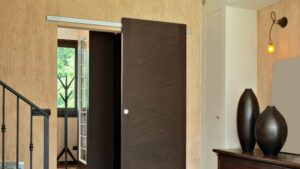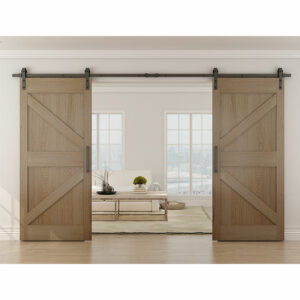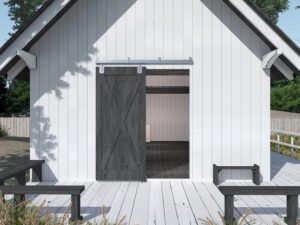

A ghost door is also known as a concealed sliding door. When the door is closed, you mainly see the panel rather than the operating system. This creates a clean, floating appearance and helps the entrance blend into the wall. The panel can be turned into a full-length mirror, a bookshelf, an art picture, or a decorative wall feature. This makes the system useful for places where space and visual continuity matter.
Why Ghost Doors Work Well in Hidden Interior Designs
Concealed Hardware Creates Visual Continuity
A normal sliding door often has a visible rail above the opening. A ghost door hides the track and supporting hardware behind the panel. You can therefore match the door with the surrounding wall, cabinet, or decorative finish.
You may use painted MDF, wood veneer, laminate, metal sheets, acoustic panels, or decorative wallboard. When the same finish continues across the wall and door, the entrance becomes much less noticeable.
This concealed structure gives you a cleaner design without exposed tracks or bulky hardware. It is especially suitable for minimalist interiors where you want an uninterrupted wall surface.
Sliding Movement Saves Usable Floor Space
A hinged door needs a clear swing area. This can limit furniture placement in narrow rooms, hallways, and apartments. A concealed sliding door moves sideways and stays close to the wall. You avoid the wide movement radius of a swing door.
The wall beside the opening still needs a clear path for the moving panel. Even so, the system works well for closets, dressing rooms, home offices, bathrooms, pantries, and compact commercial interiors.
You also avoid installing a floor track across the doorway with many concealed sliding systems. This creates a cleaner walking surface and makes daily cleaning easier.
Door Panel Can Serve a Second Purpose
The visible panel can become a mirror, artwork, shallow display shelf, or part of a cabinet wall.
This is one of the main differences between a ghost door and a standard sliding door. Instead of looking like a separate building component, the panel becomes part of your interior design.
Before choosing a design, check the finished panel weight, thickness, balance, and clearance. Decorative materials can add significant weight. Your hardware must support the complete door, not only the basic wooden panel.
Best Application Scenarios for Ghost Doors
Mirror Ghost Doors for Bedrooms and Dressing Areas
A mirror is one of the most practical finishes for a concealed sliding door. When closed, it looks like a fixed full-length mirror. When you slide it open, it can reveal a closet, bathroom, dressing area, or private room. It is helpful when you do not have enough wall space for both a mirror and a traditional door.
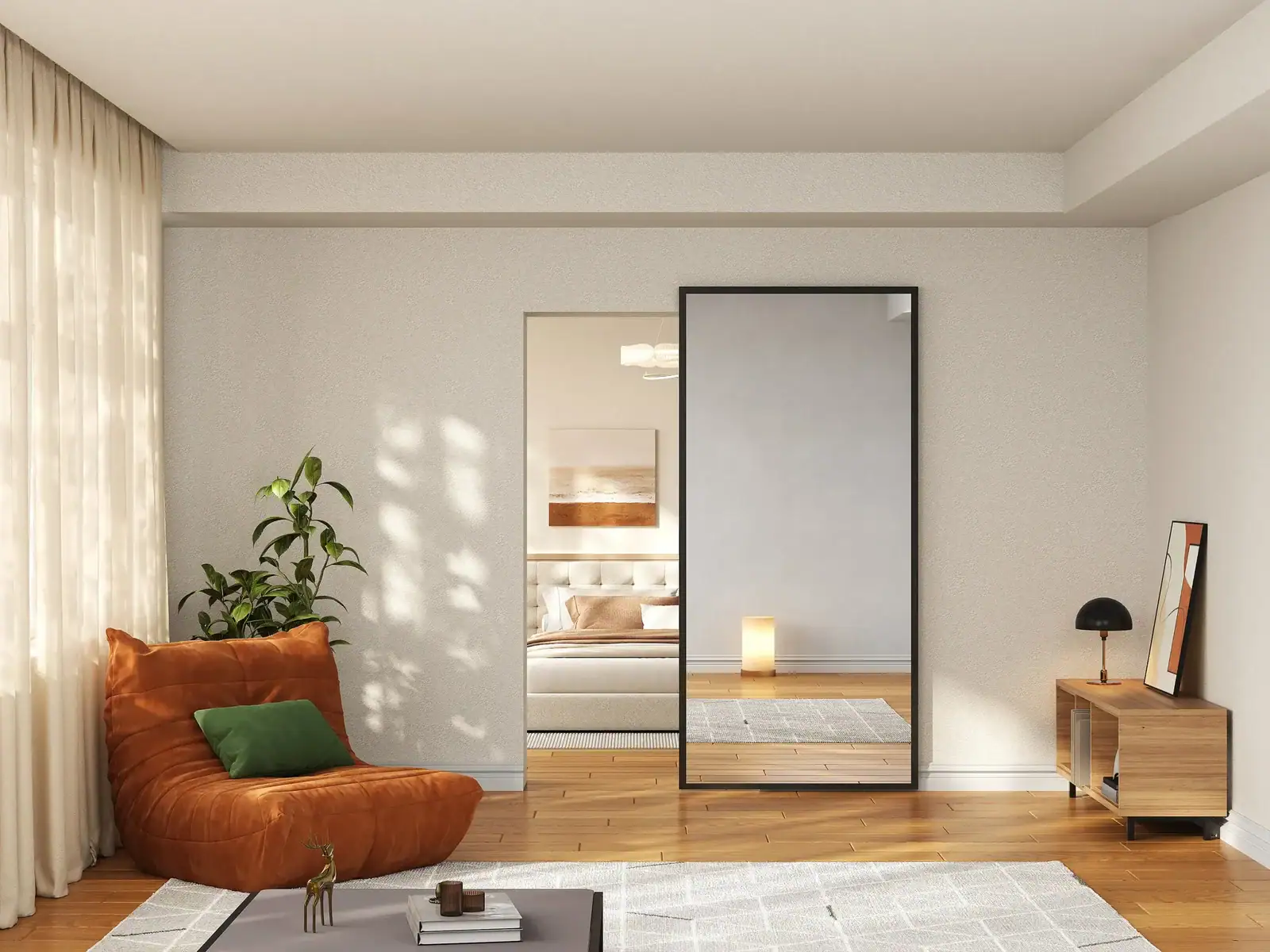
Use a suitable safety-backed mirror or another approved mirror material. The supporting panel must remain flat and stable. Include the mirror, adhesive, backing panel, handle, and edge protection when calculating the total weight.
A large visible handle may weaken the hidden effect. You can instead use a recessed edge pull, discreet finger pull, or carefully designed opening gap.
Mirror ghost doors are particularly suitable for:
- Walk-in closets
- Master bedrooms
- Dressing rooms
- Hotel suites
- Compact apartments
- Bathroom entrances
For bathroom applications, you should also consider humidity, ventilation, privacy, and the corrosion resistance of the hardware.
Bookshelf Ghost Doors for Studies and Private Rooms
A bookshelf ghost door creates a stronger secret-door effect. It can conceal a study, private lounge, storage room, wine room, or staff-only area. When closed, the door appears to be part of the shelving system. A sliding bookshelf should not be treated like a deep, fully loaded bookcase. Books are heavy, and deep shelves place extra stress on the panel and hardware. Shallow shelves, lightweight objects, or decorative book spines are usually better choices.
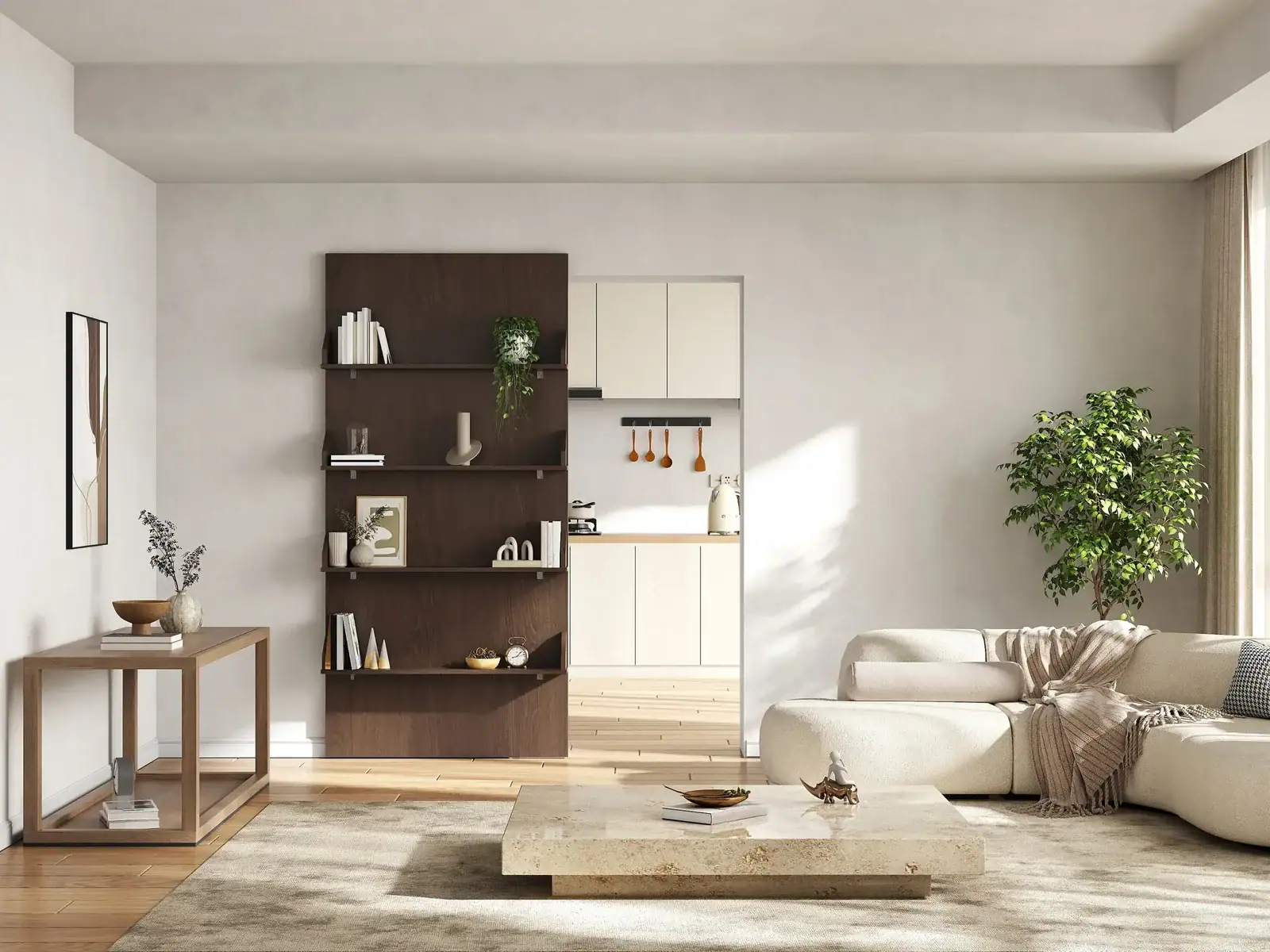
The panel must stay balanced while moving. Uneven loading can affect smooth operation. Ask your hardware supplier to confirm the expected loaded weight before production.
This design works best when the surrounding wall already contains shelves or cabinets. Aligning the door with nearby units makes the entrance harder to notice.
You can use a bookshelf ghost door for:
- Home libraries
- Private offices
- Reading rooms
- Wine rooms
- Entertainment rooms
- Hidden storage spaces
- Staff-only commercial areas
A bookshelf panel usually requires more planning than a mirror or art panel. You must coordinate shelf depth, total load, wall clearance, and the position of the floor guide.
Art Picture Ghost Doors for Living Rooms and Galleries
An art picture is a simple way to disguise a concealed sliding door. You can use a printed panel, mural, framed-canvas effect, textured artwork, or lightweight decorative relief.
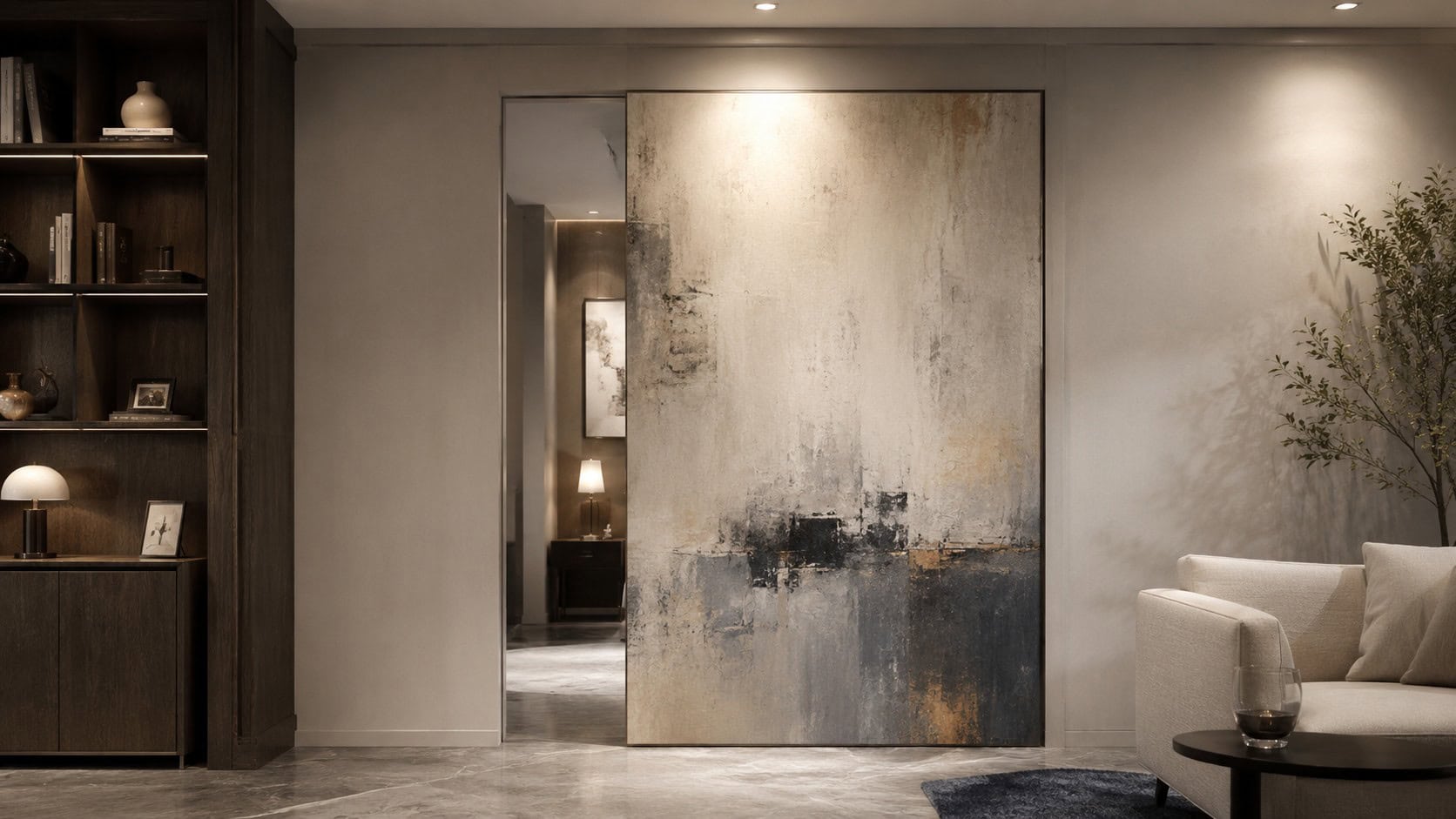
This option suits living rooms, corridors, hotel suites, restaurants, galleries, and reception areas. The artwork becomes the visual focus, so visitors may not immediately recognize the panel as a door.
Avoid thick or heavy frames. They may collide with the wall, switches, trims, or furniture while the panel slides. A flat artwork panel is usually easier to operate.
For a more seamless result, you can print the artwork directly onto the door surface. You can also use wallpaper or a thin decorative board that continues onto the surrounding wall.
Wall-Panel and Cabinet-Style Ghost Doors
For the most seamless result, match the door with the wall panels around it. Vertical wood slats, fluted panels, stone-look boards, and painted sections can continue across the door.
Pattern alignment matters. A broken grain line or uneven groove can reveal the opening. The installer should check the floor level, wall flatness, moving clearance, and final decorative thickness.
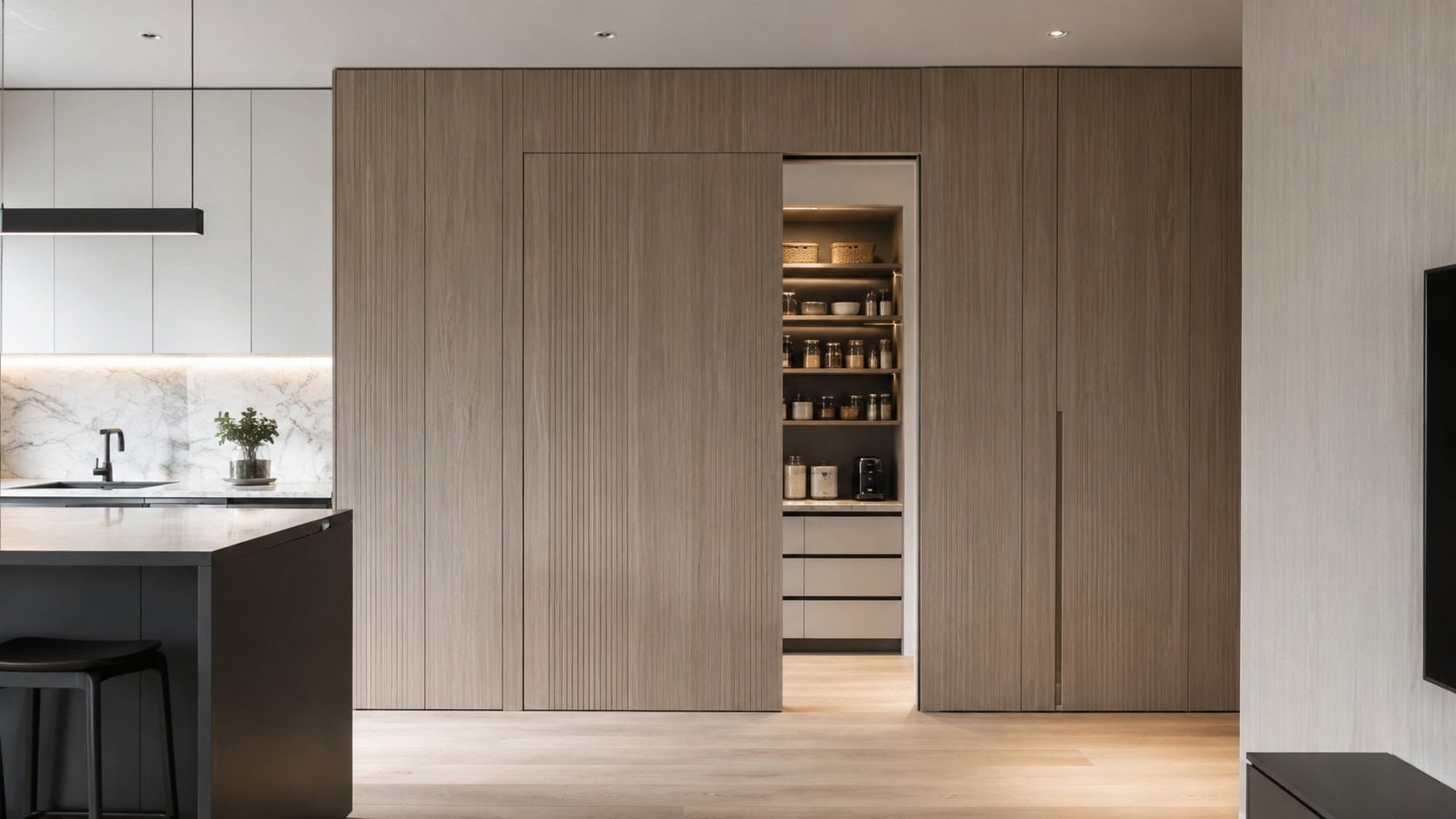
You can also blend a ghost door into a kitchen cabinet wall, wardrobe, or media unit. It may lead to a pantry, laundry room, utility area, or hidden storage space.
This approach helps you keep functional areas out of sight. It is especially useful in open kitchens and multipurpose living spaces where visual order matters.
Use lightweight decorative fronts and keep the sliding route clear. The door must not hit cabinet handles, electrical switches, furniture, or wall decorations during operation.
| Ghost door design | Suitable locations | Main benefit | Key design check |
| Mirror panel | Bedroom, dressing room, closet | Combines access with a full-length mirror | Total weight and mirror safety |
| Bookshelf panel | Study, lounge, private room | Creates a strong hidden-door effect | Shelf depth and loaded weight |
| Art picture panel | Living room, corridor, hotel, gallery | Turns the door into a visual feature | Frame thickness and clearance |
| Matching wall panel | Villa, apartment, office, hotel | Creates a continuous minimalist wall | Pattern alignment and wall flatness |
| Cabinet-style panel | Pantry, laundry room, media wall | Conceals functional areas | Panel weight and opening path |
Bring Your Ghost Door Project to Life with Tengyu
Whether you are designing a mirror door, bookshelf door, art panel, or hidden cabinet entrance, Tengyu can help you select a system that matches your door size, weight, finish, and application.
We support door manufacturers, distributors, contractors, and interior project teams with reliable concealed sliding door hardware and practical installation solutions.
Contact us today to discuss your project, request product specifications, or get a customized quotation for your ghost door application.
Frequently Asked Questions
Can You Put a Mirror on a Ghost Door?
Yes. A mirror ghost door works well for bedrooms, closets, dressing rooms, and bathroom entrances. Include the mirror, adhesive, backing material, and edge protection in the total door weight.
Can a Ghost Door Be Used as a Bookshelf?
Yes, but keep the shelves shallow and control the loaded weight. A large collection of real books may make the panel too heavy or unbalanced. Lightweight displays are usually more suitable.
Is a Ghost Door Suitable for a Bathroom?
It can work when space and appearance are your priorities. However, most sliding doors do not seal as tightly as hinged doors. You should consider privacy, sound control, moisture, ventilation, and corrosion resistance.
Can You Use an Art Picture as the Door Panel?
Yes. You can use printed artwork, a mural, a lightweight frame, or a decorative relief. Keep the surface flat enough to clear the wall and nearby objects when the door moves.
Where Should You Avoid Installing a Ghost Door?
Avoid locations that require strong sound insulation, an airtight seal, or a certified fire door unless the complete system is tested and approved for that purpose.
You also need enough clear wall space for the door to slide. Furniture, switches, wall lights, and cabinet handles must not block the moving panel.