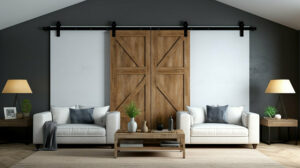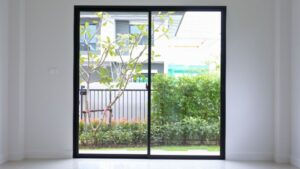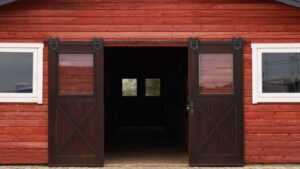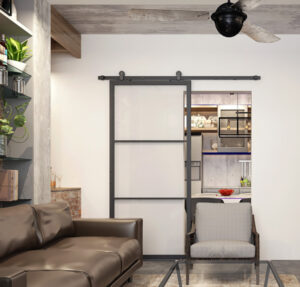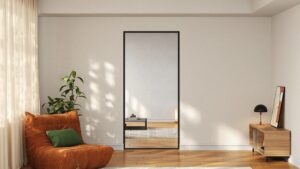

When you need a space-saving interior door, sliding doors travel sideways and remove the swing zone of hinged doors. However, they work in different ways. A ghost door slides along the wall while its track and hardware remain concealed. A pocket door slides into a cavity inside the wall and disappears when open. The choice depends on your wall structure, design goal, privacy needs, and installation stage. This guide will help you compare both options.
What Is the Difference Between a Ghost Door and a Pocket Door?
How a Ghost Door Works
A ghost door is a concealed wall-mounted sliding door. Its operating parts are hidden behind or within the panel. When the door moves, you mainly see the panel instead of an exposed top rail.
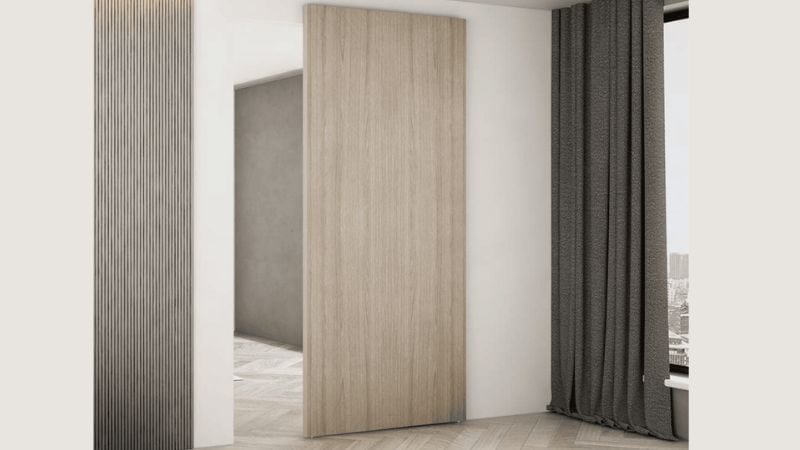
The panel travels parallel to the wall and remains visible when open. It therefore needs a clear section of wall beside the doorway.
Because the panel stays outside the wall, you can make it part of the room design. It may match wood wall panels, decorative boards, artwork, or a mirror. This creates the floating appearance associated with ghost doors. It works well when you want a minimalist feature without building a wall pocket. It is suitable for interior bedrooms, studies, dressing rooms, closets, living spaces, and hotel rooms.
How a Pocket Door Works
A pocket door also slides horizontally, but it enters a framed cavity inside the adjacent wall. When fully open, most or all of the panel is hidden.
This gives you a clear doorway and keeps the wall surface available. You may use a pocket door between a bedroom and bathroom, at a pantry entrance, or for a closet, laundry room, or office.
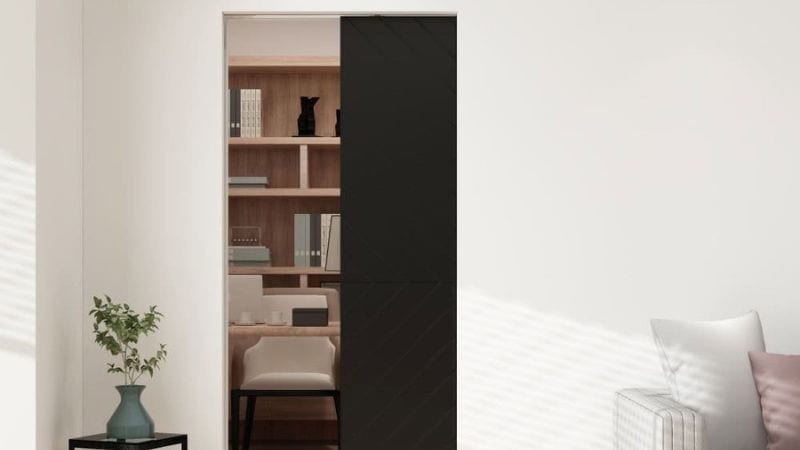
The wall must have enough internal space for the frame, track, and panel. You also need to consider studs, wiring, and pipes. A pocket door is often easier to plan during a new build or major renovation.
Ghost Door vs Pocket Door: Which One Is Better for Your Interior?
Choose a Ghost Door for Minimalist Visual Impact
You should consider a ghost door when the panel is part of your design. The concealed hardware gives you a clean look without the visible rail of a traditional barn door.
You can finish the panel with:
- Wood veneer
- Painted MDF
- Decorative wall panels
- A full-length mirror
- Printed artwork
- Metal-frame glass
A ghost system can also suit renovation projects because you may not need to rebuild the wall. However, you still need a strong mounting surface and accurate installation. The panel may require cutting or routing to fit the hidden hardware. Shelves, switches, wall lights, pictures, and furniture must not block the moving panel.
This means a ghost door saves floor space, but it does not leave the adjacent wall completely free.
Choose a Pocket Door for a Fully Clear Opening
You should consider a pocket door when you want the open panel to disappear. It creates a clean doorway and leaves the adjacent wall available for furniture or decoration.
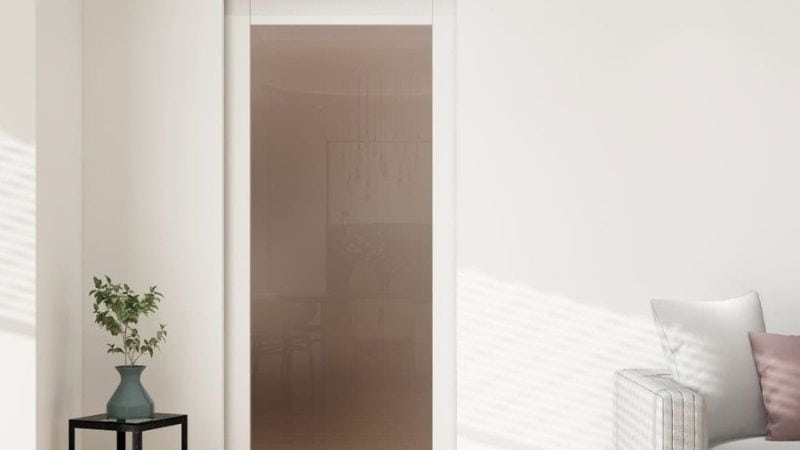
This is useful in small rooms where every section of wall matters. Common interior applications include:
- Ensuite bathrooms
- Walk-in closets
- Laundry rooms
- Kitchen pantries
- Home offices
- Hotel rooms
- Meeting rooms
However, the internal wall cavity is an important requirement. Retrofitting a pocket door may involve opening drywall, changing framing, or moving wiring and pipes.
A pocket system is therefore a strong option for new construction, full renovations, hotel projects, and other interiors where the wall can be prepared in advance.
Compare Space, Privacy, and Maintenance
A ghost door normally has a gap between the panel and the wall because it moves outside the opening. This may reduce sound control and sealing. You should review privacy needs before using it for a bedroom or bathroom. It can close more closely into its jambs. With suitable seals and hardware, it may provide better privacy. Final performance still depends on the panel, frame, gaps, and installation quality.
Maintenance access also matters. The main parts of a ghost system remain outside the wall structure, even though they are hidden.
A pocket system places more hardware inside the cavity. For hotels, apartments, and other frequent-use projects, you should choose hardware that allows adjustment and door removal without major wall damage.
| Comparison point | Ghost door | Pocket door |
| Position when open | Visible along the wall | Hidden inside the wall |
| Main appearance | Floating panel with concealed hardware | Clear doorway with no visible panel |
| Wall requirement | Strong mounting area and clear wall surface | Internal pocket without obstructions |
| Renovation use | Often easier for an existing wall | Better for new construction or major renovation |
| Adjacent wall use | Covered by the open panel | Remains available |
| Privacy and sealing | Usually has a larger perimeter gap | Can close more closely into jambs |
| Maintenance access | Hardware is generally easier to reach | Some hardware sits inside the wall |
| Common interior uses | Study, closet, dressing room, living room | Bedroom, bathroom, pantry, laundry room |
Check Door Weight and Hardware Capacity
You should calculate the finished panel weight before choosing a system. Do not only measure the basic wooden panel.
Include the weight of:
- Glass or mirrors
- Decorative boards
- Metal framing
- Handles and locks
- Edge profiles
- Other surface materials
Still Comparing a Ghost Door vs Pocket Door for Your Interior Project?
Tengyu supplies concealed sliding and pocket door systems for residential, hospitality, and commercial interiors. Send our team your drawings, door dimensions, finished weight, wall type, and order quantity. Choose an interior sliding door system that fits your wall, supports your design, and performs reliably every day.
Contact us today to receive a suitable hardware recommendation, technical specifications, and a customized project quotation.
Frequently Asked Questions
Is a Ghost Door the Same as a Pocket Door?
No. A ghost door slides along the outside face of the wall and hides its operating hardware. A pocket door slides into a cavity inside the wall.
The ghost door panel remains visible when open. The pocket door panel disappears.
Which Door Saves More Space?
Both save floor space because they do not need a door swing area.
A pocket door saves more usable wall-surface space because the panel enters the wall. A ghost door needs a clear section of wall beside the opening.
Which Is Easier to Install in an Existing Room?
A ghost door is often easier because you may not need to create an internal wall cavity. You still need proper wall support, accurate measurements, and enough sliding space.
A pocket door can be installed in an existing room. However, the work may require opening and rebuilding part of the wall.
Is a Ghost Door Suitable for a Bathroom?
It can work when the gaps around a wall-mounted sliding panel are acceptable.
You should consider privacy, sound, ventilation, moisture, and locking needs first. A pocket or hinged interior door may be better when tighter closing is important.
Can Both Systems Use Soft Closing?
Yes, when the selected hardware supports it.
Soft-closing hardware slows the panel near the end of its movement. This helps reduce sudden impacts and operating noise. You should check whether the soft-closing components are included or optional.
Which Door Is Better for Hotels and Commercial Interiors?
A ghost door can create a strong visual feature in a hotel suite, lounge, office, or meeting room. It is especially suitable when the panel supports the overall interior design.
A pocket door can keep compact rooms and circulation areas clear. It may be better when you need to use the wall beside the opening.
For both systems, choose tested hardware with enough load capacity and practical maintenance access.
Can You Install a Lock on a Ghost Door or Pocket Door?
Both systems can use compatible sliding-door locks. However, the lock design must match the door thickness, closing position, and frame structure.
You should confirm your privacy and security requirements before ordering the hardware. This is particularly important for bedrooms, bathrooms, offices, and hotel projects.