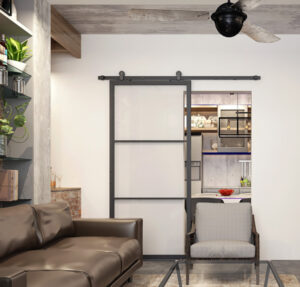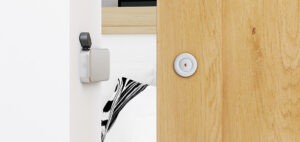

US buyers often expect a different mix of sizes, functions, finishes, hardware, and packaging than buyers in Europe or China. If you want your products to feel right for this market, you need to design around how Americans choose, install, and live with interior doors.
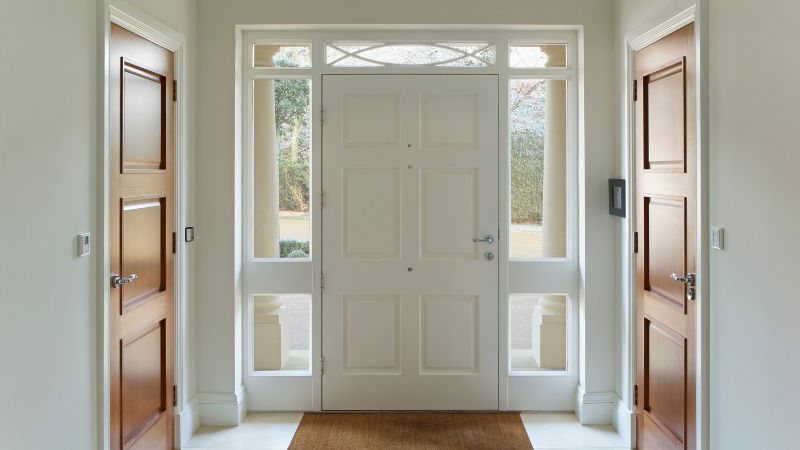
Start with American Door Size and Specification Logic
If your product does not match common US sizes, it becomes harder to specify and harder to sell. This is one of the first design filters American buyers use.
Use Standard US Door Sizes as Your Main Platform
In the US, interior doors are commonly offered in widths such as 24, 28, 30, 32, and 36 inches, with 80 inches being the most common interior door height. Some projects also use 84-inch and 96-inch heights. In addition, a common interior door thickness is 1-3/8 inches.
That means you should design core door programs around those standard sizes first. If your main offering starts from non-standard metric modules, you create friction for the buyer. They may still ask for custom sizes, but they usually want the standard options to be easy to quote.
A simple planning table looks like this:
| Design Element | Common US Expectation | Why It Matters |
| Interior door width | 24″, 28″, 30″, 32″, 36″ | Easier specification and ordering |
| Interior door height | 80″ most common | Fits mainstream residential demand |
| Optional heights | 84″, 96″ | Useful for premium or custom interiors |
| Interior door thickness | 1-3/8″ common | Important for hardware fit and handling |
If you want to win in the American market, your brochures, shop drawings, and sample program should make these sizes easy to understand.
Make Inch-Based Product Communication Your Default
It is about how you present product. In the US, people still think in inches and feet when they buy doors. If your documents lead with metric-only measurements, the product feels less local.
You should present:
- door width and height in inches first
- hardware compatibility in inch-based terms
- cut sheets with familiar US conventions
- clear notes for handedness, opening type, and hardware position
Metric can stay in the documents, but it should come second.
Design Around Standard Openings, Not Only Custom Projects
European and Chinese projects often accept more site adaptation or project-specific sizing. In the US, many buyers want faster selection and smoother installation. They want a product that fits normal interior use without heavy redesign.
This means your American product strategy should favor:
- repeatable standard sizes
- clear upgrade options
- fewer confusing size variants
- strong compatibility between door leaves and hardware kits
That approach makes life easier for distributors and dealers. It also helps you scale faster.
Focus on the Door Features American Buyers Value Most
Once your sizing is right, the next question is what kind of door Americans actually want. Here, function and style matter just as much as measurements.
Balance Privacy and Light Transmission
In many American homes, interior doors are expected to do more than separate rooms. They should also support light flow, visual openness, and modern interior style. Therefore, steel glass interior doors have become attractive in spaces such as:
- home offices
- dining rooms
- pantry entries
- transitional living areas
- master suite partitions
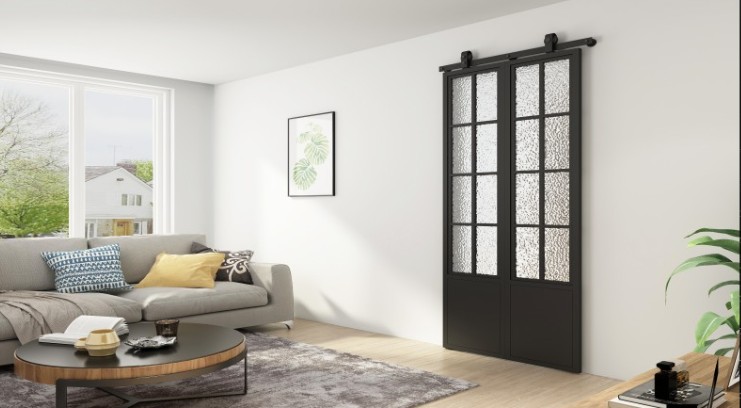
Tengyu’s steel glass interior door range fits this trend well, especially for buyers who want black-framed, modern industrial-style interiors.
For the US market, you should think in terms of glass options:
- clear glass for openness
- frosted glass for privacy
- divided-lite looks for classic-modern style
- black frame finishes for strong visual contrast
In short, you should design not only for opening and closing, but also for how the door affects the room.
Offer Space-Saving Systems as a Core Category
American homes value floor-space efficiency, especially in smaller rooms and remodeling projects. That is why pocket doors and well-designed sliding systems are important.
Tengyu already has a strong Pocket Door System and dedicated pocket hardware products. For the US market, this should be one of your headline offers.
Your design priorities here should include:
- smooth operation
- hidden or clean-looking track options
- quiet sliding
- easy maintenance
- compatibility with common interior door sizes
- clear installation guidance
Make Hardware Feel Complete, Not Secondary
In many export catalogs, the door leaf gets most of the attention while hardware feels like an accessory. In the US market, that can be a mistake. Buyers often want a complete system, not a door they need to solve later.
Your hardware offer should feel intentional:
- matching finishes
- matched pull handles
- track systems that suit the door style
- soft-close options where possible
- clear kit content
- fewer missing parts at delivery
Tengyu’s sliding door hardware gives you a strong base for this. If you position hardware as part of the design package, not only as a technical add-on, your offer becomes easier to sell.
Adapt Your Door Program to American Buying Behavior
Good design is also about what makes a buyer confident enough to place the order.
Build Product Families, Not Isolated Items
American dealers and project buyers often prefer to source from suppliers who can offer a coherent family of products. If you only offer one barn door, one hinged door, and one pocket kit with no clear connection, the catalog feels fragmented.
A stronger strategy is to create product families such as:
- modern black steel glass series
- space-saving sliding and pocket series
- premium architectural partition series
Prioritize Finishes That Fit American Interior Trends
While tastes vary, the US market has shown strong interest in:
- matte black
- slim metal frames
- frosted or fluted privacy glass
- clean concealed hardware
- modern farmhouse and modern industrial looks
If you build your American program around products like these, your catalog will feel more focused and more useful.
Recommend Products That Fit Real US Demand
| Recommended Product | Best Use in the US Market |
| Steel Glass Interior Doors | Home offices, modern room dividers, premium interiors |
| 3 Panel Black Frame Interior Steel Glass Door | Stylish residential interiors with privacy needs |
| Pocket Door System | Bathrooms, closets, laundry rooms, compact layouts |
| LPP Sliding Pocket Door System | Hidden sliding applications with cleaner interior look |
| Heavy Duty Hidden Track Sliding Pocket Door Hardware | Higher-load or more durable pocket door projects |
| General Sliding Door Hardware | Dealers needing broader hardware solutions |
Build a Stronger US-Ready Door Program with Tengyu
As a global door supplier, Tengyu offers interior door and hardware solutions meeting the needs of the US market, including steel glass interior doors, sliding systems, wooden doors, and door products. Whether you want to expand your dealer range or develop a more competitive US-ready collection, Tengyu can help you build a product program with stronger market fit and better project appeal.
Contact Tengyu to explore door solutions designed for American style preferences, application needs, and sales channels.
Frequently Asked Questions
What is the most important design difference for the American market?
You should prioritize standard US sizes, inch-based specifications, and easy-to-order product formats. American buyers usually want products that fit common dimensions with less site adaptation.
What interior door sizes are most common in the US?
Common interior widths include 24, 28, 30, 32, and 36 inches, while 80 inches is the most common height. 84-inch and 96-inch heights are also used in some projects.
What interior door thickness should you consider for the US market?
A common interior door thickness is 1-3/8 inches. This affects hardware pairing and overall door feel.
Are pocket doors a good product for the US market?
Yes. Pocket doors are a strong fit for American interiors because they help save space and work well in bathrooms, closets, and flexible room layouts.
What style works well for American interior doors?
Modern black-framed glass doors, clean sliding systems, and practical privacy options such as frosted glass perform well in many US interior styles.
What Tengyu products are especially suitable for American buyers?
Your steel glass interior doors, pocket door systems, sliding hardware, and heavy-duty hidden track solutions are all strong fits for this market.