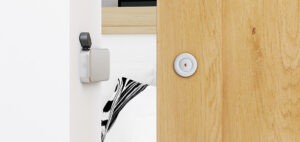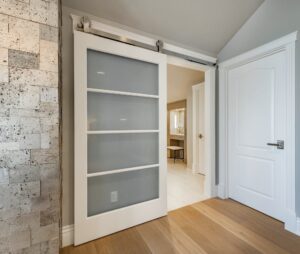

A right door for a home office can improve both privacy and productivity. Whether it’s a sliding barn door, a frosted glass panel, or a soundproof option, the door helps create a focused work environment.
Struggling with distractions or a lack of separation in your home office? In this guide, we’ll explore how to choose a door to craft a truly focused and productive workspace.
4 Factors To Consider Before Choosing A Door
Noise Control & Privacy
This is often the primary function of a home office door. To create a quiet enclave:
• Door Core: Opt for solid-core doors over hollow-core ones for superior sound absorption.
• Sealing: Ensure tight weatherstripping and a well-fitted frame to minimize sound leakage.
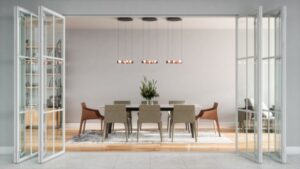
• Material & Glazing: For privacy without total isolation, consider frosted, textured, or opaque glass panels.
Style & Aesthetic Integration
The door is a major visual element. It should complement both your home’s architecture and your office’s interior design.
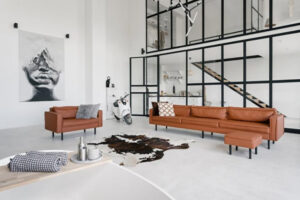
• Material Sets the Tone: Classic wood adds warmth; painted MDF offers a clean, modern canvas; metal and glass lean industrial or contemporary.
• Color & Finish: A neutral color blends in, while a bold hue makes a statement. Don’t forget the finish on wood or metal.
• Hardware as Jewelry: Knobs, handles, and hinges should reinforce the chosen style, from sleek minimalist bars to traditional lever sets.
Light & Visibility
Doors directly control the flow of natural light, impacting mood and energy use.
• Open & Airy: Full- or large-panel glass doors maximize light sharing and visual connection.
• Private & Bright: Frosted, textured, or rain glass obscures views while diffusing light beautifully.
• Total Separation: Solid doors block light completely, which can be ideal for media rooms or when maximum focus is needed.
Space Constraints & Functionality
The physical interaction of the door with your room is critical.
• Swing Space: Standard hinged doors need ample clearance. Always check the swing direction during planning.
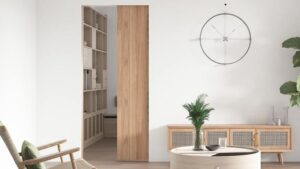
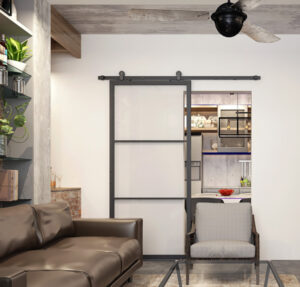
• Space-Saving Solutions: pocket doors (sliding into the wall) or sliding barn doors free up all floor space, ideal for tight layouts or furniture placement near the doorway.
• Durability & Hardware: Ensure frames and hinges are sturdy enough for the door’s weight, especially for solid wood. Smooth, quiet operation is key for a professional environment.
Top Door Styles For Your Home Office
Now let’s explore specific door types. This will help you match options directly to your needs.
By Material & Core: Prioritizing Privacy And Acoustics
This is your first decision point for managing sound and seclusion.
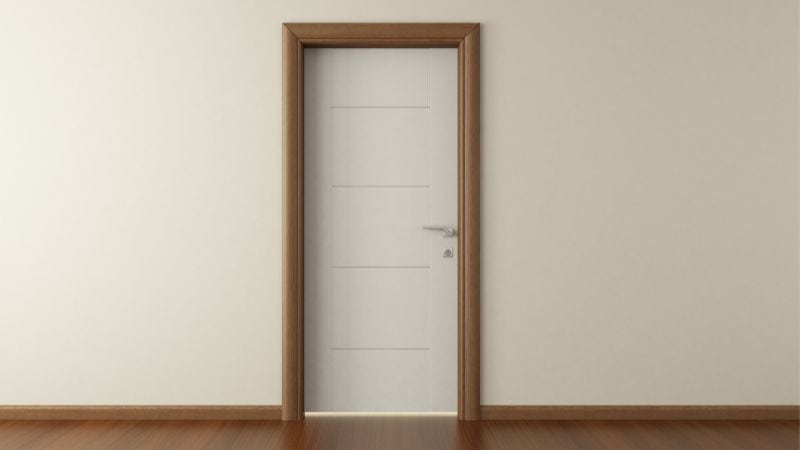
- Solid-Core Doors: The gold standard for noise reduction. Made of dense wood, MDF, or composite, they feel substantial and quiet. Best for: Maximum focus in noisy households.
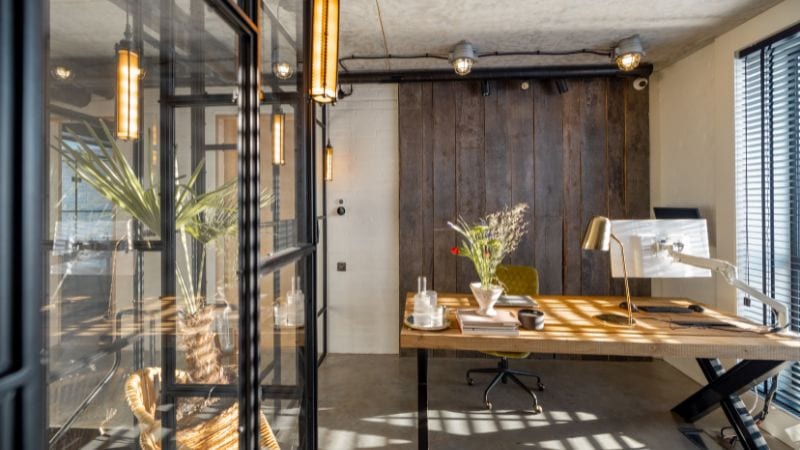
- Glass & Hybrid Doors: Maintain light and an open feel. Frosted or textured glass provides privacy. Best for: Studios, spaces near common areas where light is prized.
- Classic Panel Doors: Often solid wood, offering both sound damping and timeless style (e.g., 2-panel, 6-panel, Craftsman). Best for: Traditional or homey aesthetics with good acoustics.
By Operation & Mechanism: Solving Space And Access Challenges
- Traditional hinged doors are reliable but need space to swing open, which can limit small rooms.
- Sliding doors, including barn-style, glide along a track and save floor space, making them suitable for narrow areas. Pocket doors, which slide into the wall, save the most space but require more complex installation.
- Bi-fold doors fold to one side, balancing easy access with space efficiency. The choice of mechanism should fit the room’s size and how often the door is used.
By Functional Design: Addressing Specific Needs
- Mirrored doors reflect light, making small offices appear larger and adding style while remaining functional.
- Frosted or textured glass doors give privacy without blocking natural light, ideal for shared spaces where some visibility is acceptable.
Doors with built-in blinds or acoustic panels can improve privacy and reduce glare or sound. Some doors offer storage or magnetic boards, adding practical features.
A Decision Framework: How To Choose Your Ideal Home Office Door
The right door should fit the room’s function, match the design, and stay within budget.
Assess Your Primary Need
First, identify the main reason for the door. To reduce noise, choose soundproof or solid core doors. For privacy, frosted glass or opaque doors balance light and seclusion.
Space limitations matter too. Sliding or pocket doors save room where a swinging door would block furniture. Doors with glass panels keep the office feeling open while defining the workspace. Deciding whether the door is for sound control, separation, or space efficiency helps narrow options quickly.
Match The Door To Your Room Type
Different rooms need different door styles and materials. For a dedicated home office, sturdier and more soundproof doors, such as solid wood or composite, help concentration. If the office is part of a multi-use room, lightweight doors or those that allow light flow, like glass paneled or barn doors, may work better.
Consider the existing design. Modern offices benefit from sliding doors or frosted glass, while rustic styles pair well with barn doors. The door should complement the furniture and décor, making the workspace inviting.
Balance Your Budget With Priorities
Door prices vary based on materials, features, and hardware. Solid wood doors cost more but provide better sound reduction and durability. Glass or composite doors may be less expensive and stylish but might offer less privacy.
Decide which features are essential to allocate your budget effectively. Investing in soundproofing can improve productivity, while hardware upgrades can improve ease of use. Listing “must-haves” and “nice-to-haves” helps manage costs while achieving the desired style and function.
Conclusion
Options like sliding barn doors save space, while glass panels let in natural light without sacrificing privacy. Some prefer traditional hinged doors with soundproofing to reduce distractions.
Your home office should be a place where you can do your best work. Start that transformation by choosing the door that opens the way to greater productivity and balance.
Tengyu: Crafting Premium Door for Modern Living Spaces
Office Door FAQs
What door styles work best for small home offices with limited space?
For small offices, choose space-saving, non-swinging doors. Pocket doors (slide into wall), sliding barn doors (glide on track), or bifold doors (fold to side) are ideal. They free up floor and layout space that a traditional hinged door would block.
How can I choose a home office door that balances privacy and natural light?
Choose a door with frosted, textured, or rain glass. These materials obscure views for privacy while beautifully diffusing natural light into the room, preventing a closed-in feel. Avoid clear glass for full privacy or solid doors for maximum light.
What’s the most common mistake when choosing a home office door?
Choosing style over core function. For example, a stylish barn door won’t block noise if quiet is your top need. Always let your primary requirement guide the functional choice first.