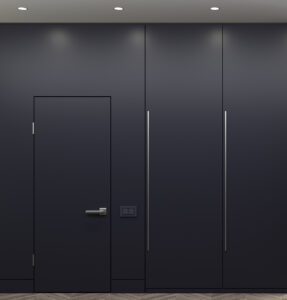

Tengyu’s YMXT-XC39 pocket door system has enjoyed considerable success since its introduction, particularly in North America. Its suitability for local construction has helped drive that success. The XC39 is designed for stud walls, including the timber framing commonly used in North American homes. Its classic design and consistent quality control have also helped it gain traction.
The XC39 gives Tengyu an established product for timber-framed construction. Meanwhile, the company has been committed to developing a system for a different type of wall. The aim was to make pocket doors an option for masonry projects while preserving the smooth sliding action of the XC39. That work led to the YMXT-XC67.
The XC67 has passed Tengyu’s internal testing and is ready for commercial release. Its all-steel frame is designed for both stud walls and masonry applications. For customers who already know the XC39, the new model extends the range into brick and concrete projects and offers another option for stud walls.
The New XC67 Frame and Sliding Hardware
The new model pairs an all-steel pocket door frame with the sliding rollers and track used in the XC39. The product image below shows the frame and its hardware together. The frame defines the opening and the pocket beside it, while the track and rollers allow the panel to move into and out of that pocket.
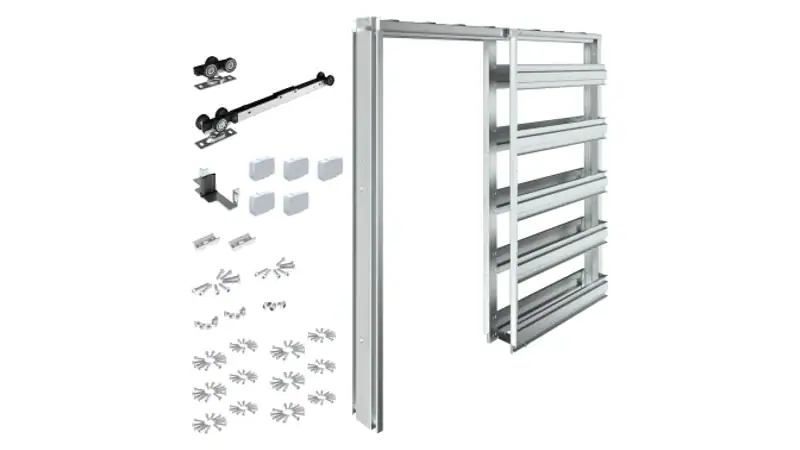
In developing the XC67, Tengyu changed the frame construction and kept the established roller and track design. This gives the XC67 the same smooth sliding action as the XC39.
Drywall vs. Masonry: Where the XC67 Fits
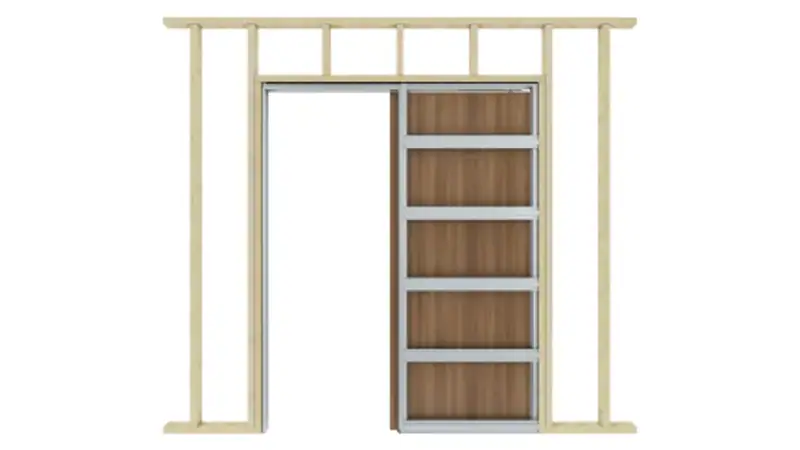
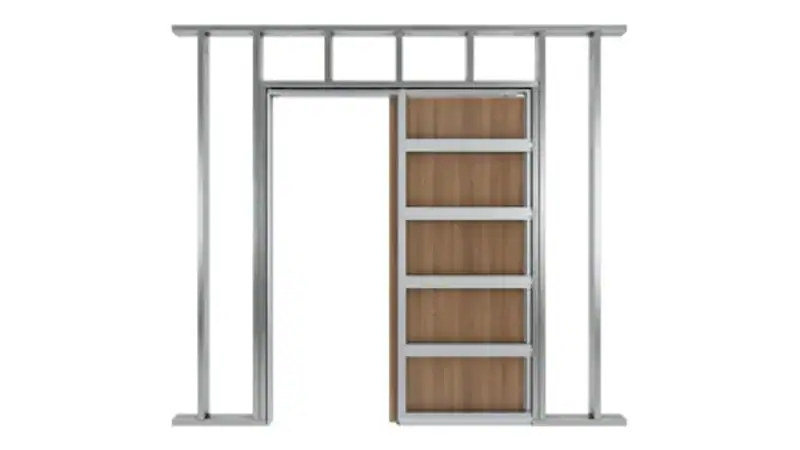
A pocket door opens by sliding into the wall space beside the doorway. That space forms part of the wall assembly, and the construction around it varies. Tengyu’s application examples show how the XC67 fits into three settings: a wall framed with wood studs, a wall framed with metal studs, and a masonry wall shown in brick.
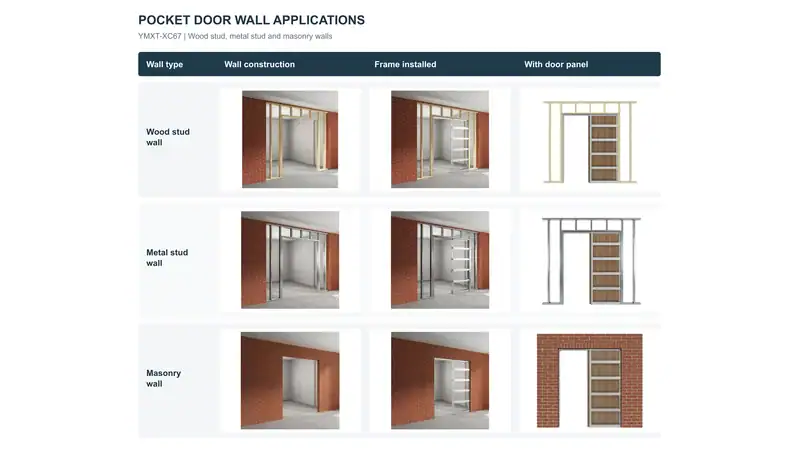
In the stud wall examples, drywall refers to the board lining, while wood stud and metal stud identify the framework behind it. The pocket frame sits within that framework. This distinction matters when comparing a drywall pocket door frame with a frame intended for masonry use. The wall lining, the surrounding studs, and the pocket frame each describe a different part of the assembly.
Wood Stud Walls
The XC67 also fits the wood stud walls familiar to many XC39 customers. For a buyer looking for a wood stud wall pocket door system, the two models offer different frame constructions for the same wall type. The XC39 uses a metal-and-wood frame. The XC67 uses an all-steel frame within the timber partition.
That difference is easy to see when the wall framework is exposed. The timber around the XC67 belongs to the partition, and the steel assembly beside the doorway forms the pocket. As a result, a wood stud wall can accommodate an all-steel pocket frame.
Metal Stud Walls
The XC67 can also be used in a metal stud partition. In this application, the surrounding studs and the pocket frame are both metal, and they serve different purposes. The studs form the surrounding partition. The pocket frame houses the panel when the door slides open.
Wood and metal studs therefore represent two framing materials within the stud wall applications shown here. The difference is the material used for the surrounding framework. In both examples, the XC67 fits within that framework.
Brick and Concrete Walls
The brick wall example illustrates the kind of application Tengyu developed the XC67 for. For customers looking for a pocket door frame for brick wall construction, the example shows the steel pocket beside the doorway, with the door panel visible inside the exposed assembly.
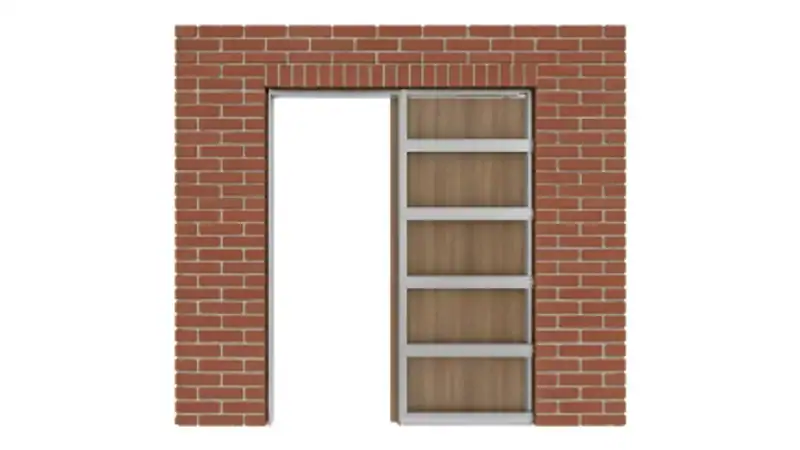
The XC67 is also an option for buyers looking for a pocket door system for concrete walls. Brick is the illustrated masonry example, and the frame can also be adapted for concrete walls. These two settings explain why the masonry adaptation needs some flexibility. The surrounding wall material is one of the factors that determines which steel plate or wire mesh is appropriate for the project.
The difference between stud and masonry applications therefore goes beyond the appearance of the finished wall. In the wood and metal stud examples, the pocket is shown within the surrounding framework. In masonry applications, the XC67 is adapted with steel plate or wire mesh selected for the wall and its finish. The choice of that material is part of the masonry application, even though the product starts with the standard XC67 frame.
Consider a project with a stud partition in one room and a brick wall in another. If both doorways call for a pocket door, the YMXT-XC67 gives you one model to consider for both openings. It can be used in the stud partition and adapted for the brick wall with user-supplied steel plate or wire mesh. That makes the XC67 a practical choice when you want to use the same pocket door system across different wall types within a project.
Why Steel Plate or Wire Mesh Is Not Included as Standard
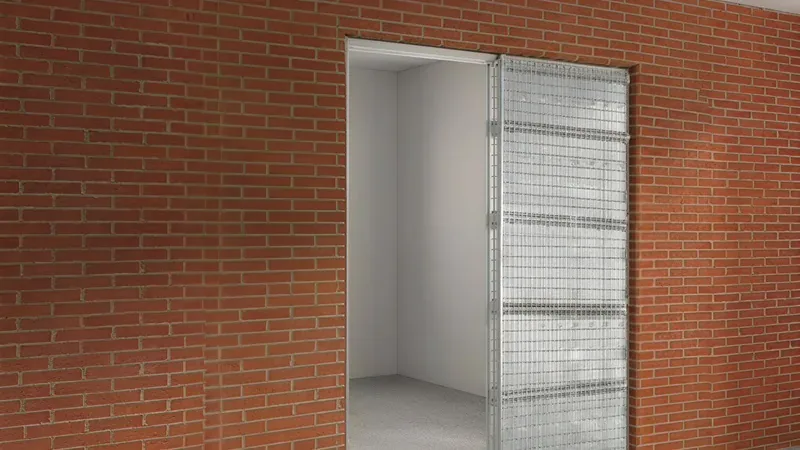
For a masonry wall pocket door frame, the appropriate steel plate or wire mesh depends on the wall material, the plaster thickness, and local building practices. The wall material describes the construction around the frame. Plaster thickness relates to the intended finish. Local building practices also influence how the adaptation is carried out. These factors can vary even between projects that use the same type of wall.
Tengyu specifies steel plate or wire mesh as user-supplied upgrade items. This keeps the standard product cost-effective and gives installers the flexibility to select materials that suit each project. The standard configuration provides the XC67 frame, and the material used for the masonry adaptation can be chosen to suit the wall and finish.
Adding the selected material is straightforward. Users can attach the steel plate or wire mesh directly to the standard XC67 frame using self-tapping screws. The material choice can vary with the project while the attachment method remains the same. This allows the standard frame to be adapted to masonry conditions without including a fixed type of plate or mesh in every package.
XC39 vs. XC67
Start by comparing the wall types each model serves. The XC39 serves customers looking for a metal-and-wood frame for stud walls. The XC67 adds an all-steel option for stud partitions and extends the range to masonry projects with the adaptation described above. For readers comparing the two models for a framed partition, frame material is the main product difference. For readers comparing them for a brick or concrete wall, masonry compatibility is the main difference.
| Model No. | YMXT-XC39 | YMXT-XC67 |
| Product image | 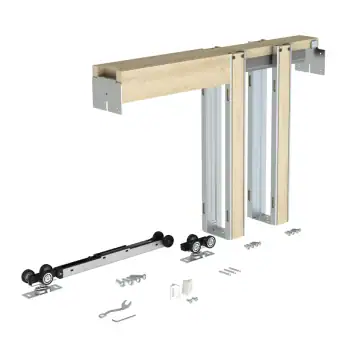 |
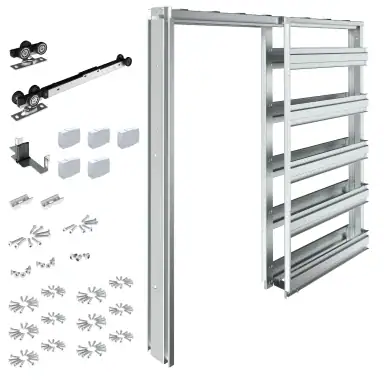 |
| Main frame materials | Metal and wood | All-steel |
| Sliding mechanism | Same sliding rollers and track
|
|
| Maximum door weight | 80 kg / 176 lbs | 80 kg / 176 lbs |
| Suitable door heights | 2134 mm / 84 in or 2438 mm / 96 in | 2134 mm / 84 in or 2438 mm / 96 in |
| Suitable door widths | 610–1219 mm / 24–48 in | 610–1219 mm / 24–48 in |
| Suitable door thickness | 25–45 mm / 1–1¾ in | 25–45 mm / 1–1¾ in |
| Wall compatibility | Stud walls | Stud walls and masonry walls (User-applied steel plate or wire mesh for masonry adaptation) |
| Soft-close | Standard | Standard |
Contact Tengyu to learn more about the YMXT-XC67 or ask about the YMXT-XC39.