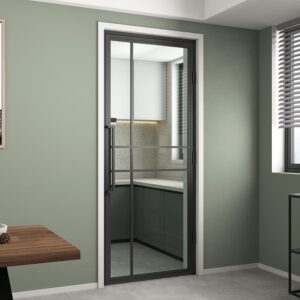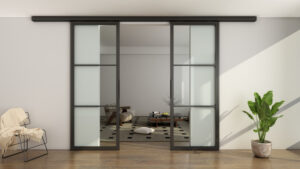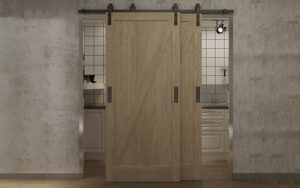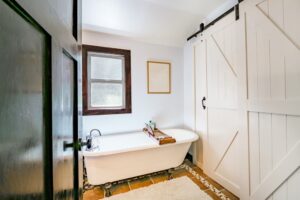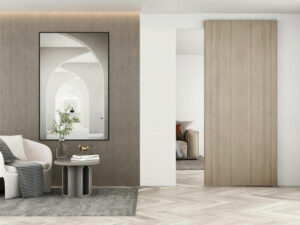

An invisible door is designed to blend with the surrounding interior. It may match the wall color, continue a wood-panel pattern, or hide its operating hardware. Some systems slide along the wall, while others disappear into a wall cavity. You also need to consider space, privacy, door weight, opening frequency, and installation conditions.
This guide introduces where seamless doors work best, which styles you can choose, and how to plan a reliable system for your home.
Where Should You Use an Invisible Door?
Living Rooms and Open-Plan Areas
A living room is one of the best places for an invisible door because it usually has large, visible wall surfaces.
You can use a matching wall-panel door to conceal a storage room, private study, media room, or guest bathroom. When the door is closed, it becomes part of the overall wall design.
Popular finishes include:
- Painted MDF panels
- Natural wood veneer
- Vertical wood slats
- Fluted wall panels
- Wallpaper
- Stone-look decorative boards
- Lightweight art panels
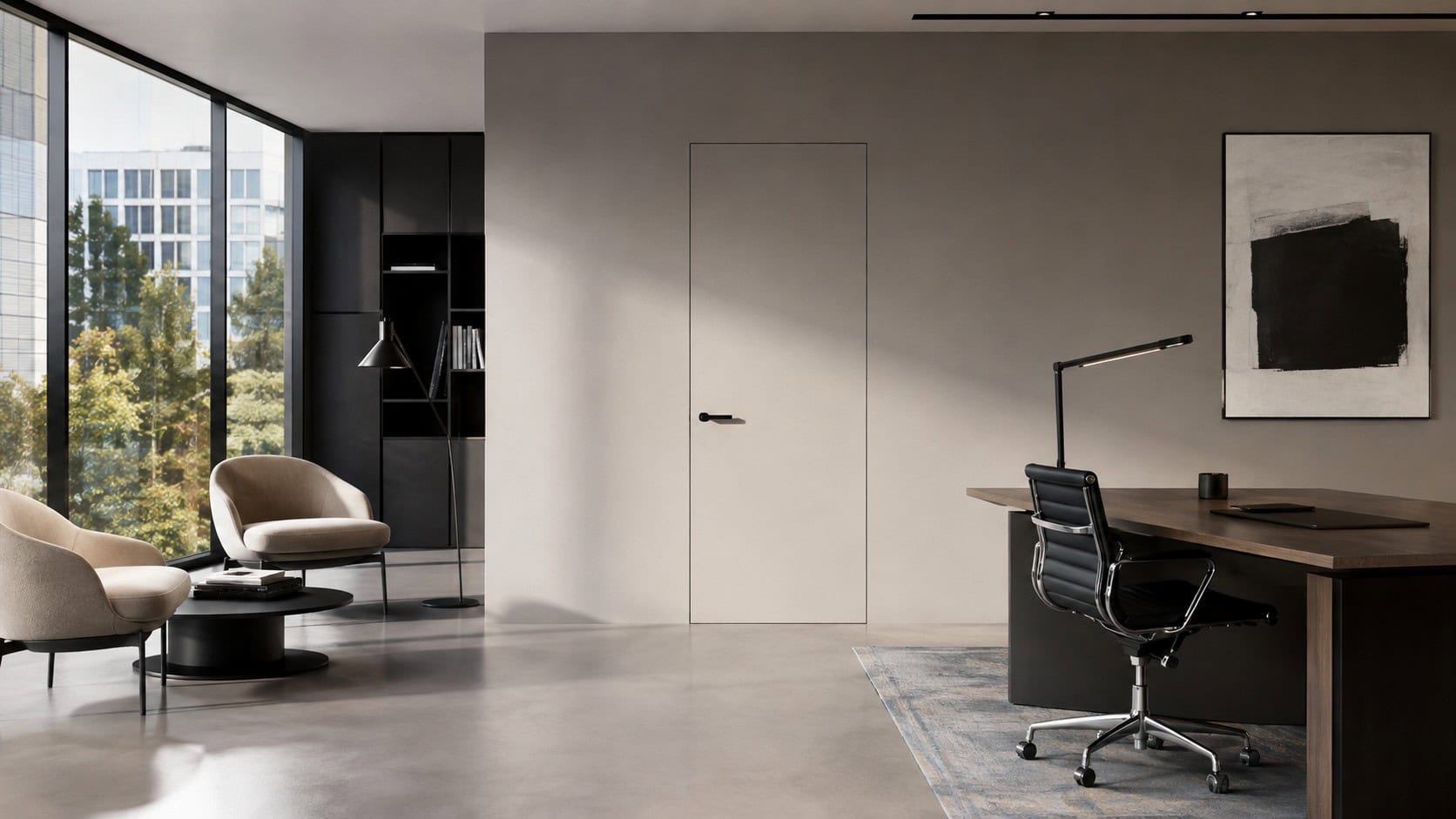
A concealed sliding system is especially useful in an open-plan living area. It removes the need for a door swing and reduces visible hardware. You can also place furniture more freely, as long as the sliding path remains clear.
Bedrooms and Walk-In Closets
An invisible door can help a bedroom feel calmer and less crowded.
You can use it to connect the bedroom with a walk-in closet, dressing area, private bathroom, or home office. Matching the door finish with the surrounding wall reduces visual interruption.
A mirror panel is a practical choice for a bedroom or dressing area. It gives you a full-length mirror without using additional wall space. When installed on a concealed sliding system, the mirror can also hide the entrance to a closet or bathroom.
You must calculate the total finished weight before selecting the hardware. Include the door panel, mirror, adhesive, backing board, edge protection, handle, and other decorative materials.
For bedroom applications, soft-close hardware is worth considering. It controls the final movement of the panel and reduces sudden impact during opening and closing.
Kitchens, Pantries, and Utility Rooms
An invisible door can hide a pantry, laundry area, utility room, or secondary kitchen. You can finish the door to match the surrounding cabinet fronts or wall panels.
Check the complete sliding path before installation. Cabinet handles, countertops, electrical switches, wall lights, and furniture must not interfere with the moving panel.
Kitchen and utility-room doors should also use materials easy to clean. If the area is humid, confirm that the panel finish and hardware provide suitable moisture and corrosion resistance.
Bathrooms and Compact Rooms
A sliding invisible door can save valuable floor space in a small bathroom. Unlike a hinged door, it does not need a large swing area.
However, a wall-mounted sliding door may have small gaps around the panel. This can reduce sound control and privacy. You should evaluate these points before using one for a main bathroom or ensuite.
Pocket doors require a suitable wall cavity. You must check for pipes, electrical cables, studs, and other building services before installation.
Home Offices and Private Spaces
An invisible door can separate a home office without making the entrance visually dominant.
You can disguise the door as a bookshelf, decorative panel, or section of cabinetry. This works well when the office connects directly to a living room or bedroom.
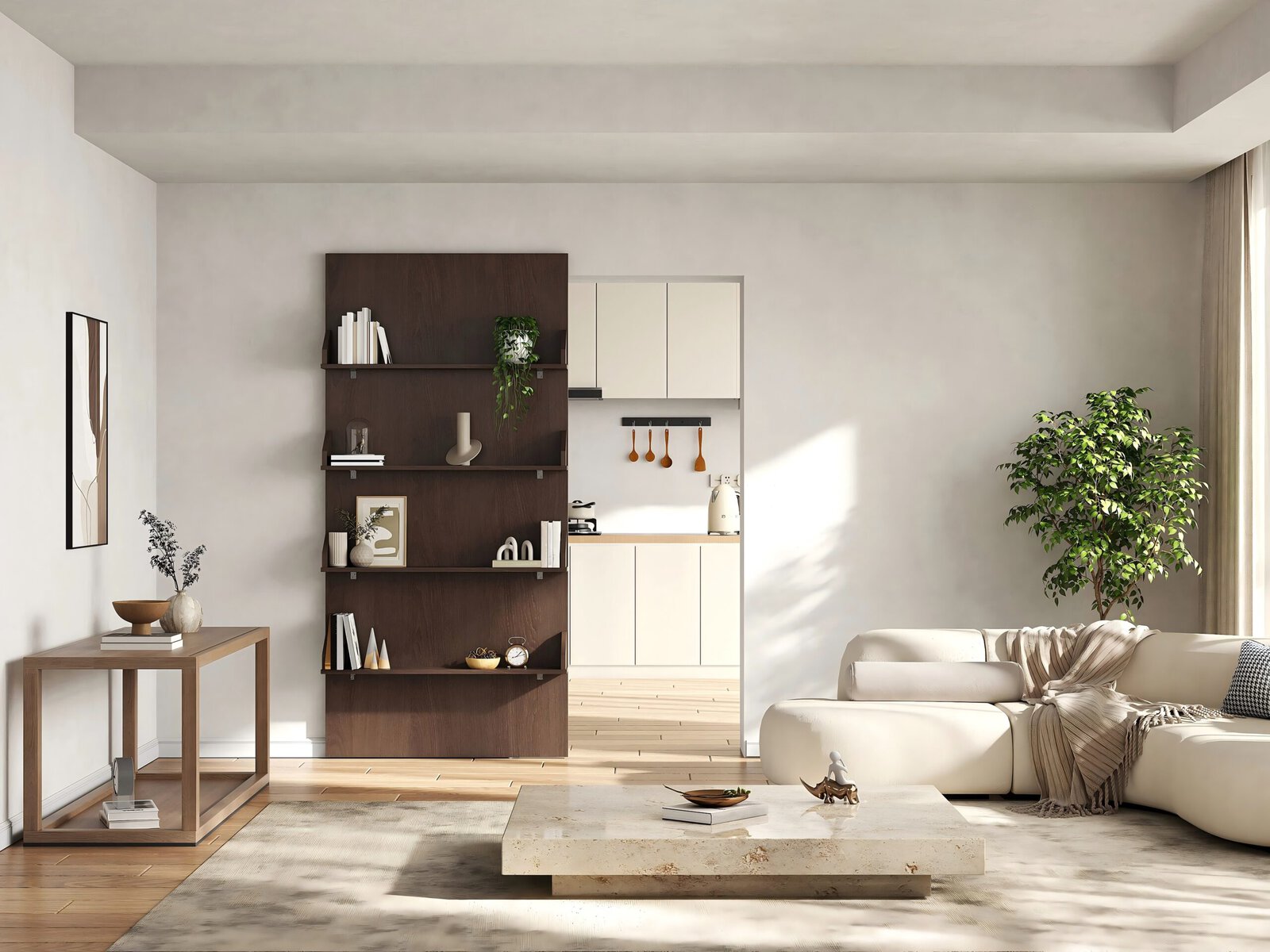
Bookshelf-style doors require careful weight control. Real books and deep shelves can add significant weight. Shallow shelves with lightweight decorations are usually safer for a sliding panel.
For a more practical design, use a wood-panel door that matches the nearby shelving. It creates a similar effect without placing a large load on the moving system.
| Room | Recommended Invisible Door Style | Main Benefit | Important Design Check |
| Living room | Wall-panel concealed sliding door | Maintains a continuous feature wall | Clear sliding route |
| Bedroom | Painted or mirror sliding door | Creates a calm, uncluttered interior | Privacy and total panel weight |
| Walk-in closet | Mirror or pocket door | Combines access with useful function | Mirror safety and hardware capacity |
| Kitchen | Cabinet-style sliding panel | Hides pantry or utility areas | Clearance from cabinets and handles |
| Bathroom | Pocket or concealed sliding door | Saves floor space | Moisture, privacy, and locking |
| Home office | Wood-panel or bookshelf door | Conceals a private work area | Loaded weight and panel balance |
Which Invisible Door Style Is Right for Your Home?
Painted Flush Door
A painted flush door is one of the simplest ways to create a seamless appearance.
The door has a flat face and uses the same color as the wall. You can make the result cleaner with concealed hinges, a trimless frame, or a recessed handle.
This style works with minimalist, Scandinavian, and contemporary interiors. It is also easier to update because you can repaint the door and wall together.
Remember that a flat door panel alone does not create a fully seamless effect. Visible trim, uneven gaps, and standard handles can still make the opening obvious.
Wood-Panel Door
Wood paneling adds warmth and texture to a modern interior. You can continue veneer, slats, or decorative grooves across the door and surrounding wall.
Pattern alignment is critical. Grain lines and panel joints should continue naturally across the opening. If the pattern shifts at the door edge, the entrance becomes easy to identify.
Decorative materials also increase the panel thickness and weight. Confirm the finished dimensions rather than providing only the weight of the unfinished door.
Ghost Sliding Door
A ghost door is a surface-sliding door with hidden operating hardware. The door panel remains visible, but the track, rollers, and supporting parts are concealed.
This design is useful when you want a minimalist appearance without constructing a wall pocket. It also avoids the swing area required by a hinged door.
A ghost door still needs a clear section of wall beside the opening. You cannot place fixed furniture, artwork, switches, or shelves in the moving path.
Pocket Door
A pocket door slides completely into a wall cavity. When open, the door panel disappears and leaves the surrounding area clear.
This style is ideal for small bedrooms, closets, bathrooms, laundries, and narrow corridors. It also allows you to use the wall surface beside the doorway.
Pocket doors should be planned early. The cavity must be wide and deep enough for the panel and hardware. You should also provide maintenance access where possible.
Mirror Doors
An invisible door becomes a functional or decorative feature. A mirror door works well in bedrooms, dressing rooms, closets, and hotel suites.
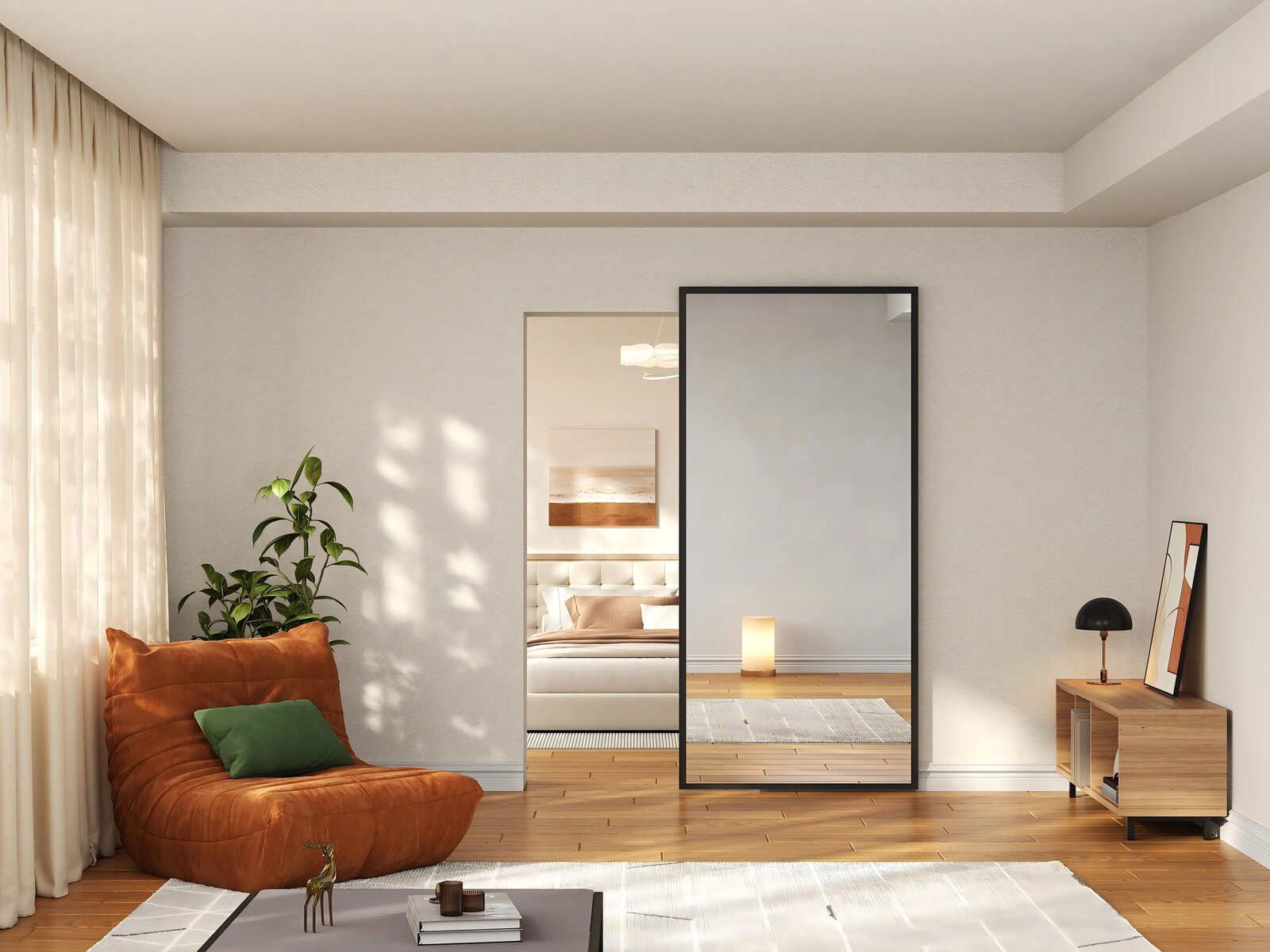
Keep decorative frames thin and lightweight. Thick frames may hit the wall or nearby objects during movement. Printed panels, wallpaper, or lightweight decorative boards are often easier to integrate.
Design Tips for a Better Result
An invisible door requires coordination between the door manufacturer, hardware supplier, contractor, and interior designer.
Before ordering, confirm:
- Finished door weight: Include all mirrors, panels, adhesives, handles, and decorative layers.
- Door thickness: The door must remain compatible with the selected hangers, guides, and track.
- Wall condition: An uneven wall can create inconsistent gaps or cause the panel to rub.
- Opening direction: Check furniture positions and how people will approach the door.
- Hardware capacity: Choose hardware based on the finished panel, not only the basic door slab.
- Handle design: Use a recessed pull, edge pull, or discreet opening gap when you want a hidden effect.
- Soft closing: This improves comfort and helps prevent the panel from slamming.
- Privacy requirements: Sliding doors may not seal as tightly as hinged doors.
- Maintenance access: Rollers, stops, and soft-close units may need adjustment after installation.
- Safety requirements: Do not use an untested system where a certified fire, smoke, or security door is required.
You should request technical drawings before confirming the wall and door construction. A small change in the door thickness or decorative finish can affect the entire installation.
Create a Reliable Seamless Door System with Tengyu
An invisible door succeeds when appearance and hardware performance are planned together. Tengyu supplies concealed sliding tracks, pocket door systems, soft-close hardware, and complete interior door solutions for distributors, contractors, developers, and door brands.
Contact Tengyu today with your drawings, finished door weight, required dimensions, and order quantity. Let our team help you develop a reliable invisible door solution for your next residential or commercial project.
Frequently Asked Questions
What Is an Invisible Door?
An invisible door is designed to reduce visual interruption between the doorway and the surrounding wall. It may use a matching finish, concealed hardware, a trimless frame, or a hidden sliding system.
Is a Seamless Door the Same as an Invisible Door?
The terms are often used in similar ways. However, “invisible door” usually describes a clean and continuous appearance. An invisible door aims to make the entrance much harder to identify.
Which Invisible Door Is Best for a Small Room?
A pocket door is usually the most space-efficient choice. A ghost sliding door also saves floor space, but it needs a clear wall surface beside the opening.
Can You Install an Invisible Door in an Existing Home?
Yes. A concealed surface-sliding door may be easier to retrofit because it does not require an internal wall cavity. A pocket door usually requires more construction work.
Can a Invisible Door Be Locked?
Yes. Depending on the system, you can use a recessed sliding-door lock, magnetic latch, privacy lock, or compatible electronic lock. Confirm the door thickness and closing position before selecting the lock.
Are Invisible Sliding Doors Suitable for Bathrooms?
They can be suitable, especially where space is limited. However, you should evaluate privacy, sound control, moisture resistance, ventilation, and locking requirements.