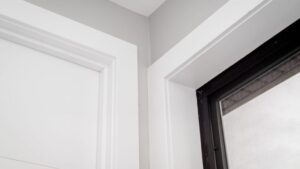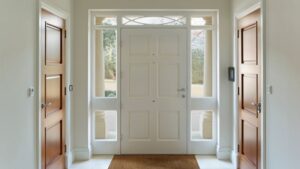

The material affects weight, durability, maintenance, cost, and hardware selection.
MDF, HDF, veneer, and HPL are often compared as competing options. MDF and HDF are usually used as substrates or core materials. Veneer and HPL are surface finishes that can be applied over an engineered panel.
The best combination depends on where you will install the door, how often it will be used, and what appearance you want to create.
How Do MDF, HDF, Veneer, and HPL Compare?
MDF: Best for Painted Seamless Doors
Medium-density fiberboard, or MDF, is made from refined wood fibers bonded under heat and pressure. It has a smooth and uniform surface without visible wood grain.
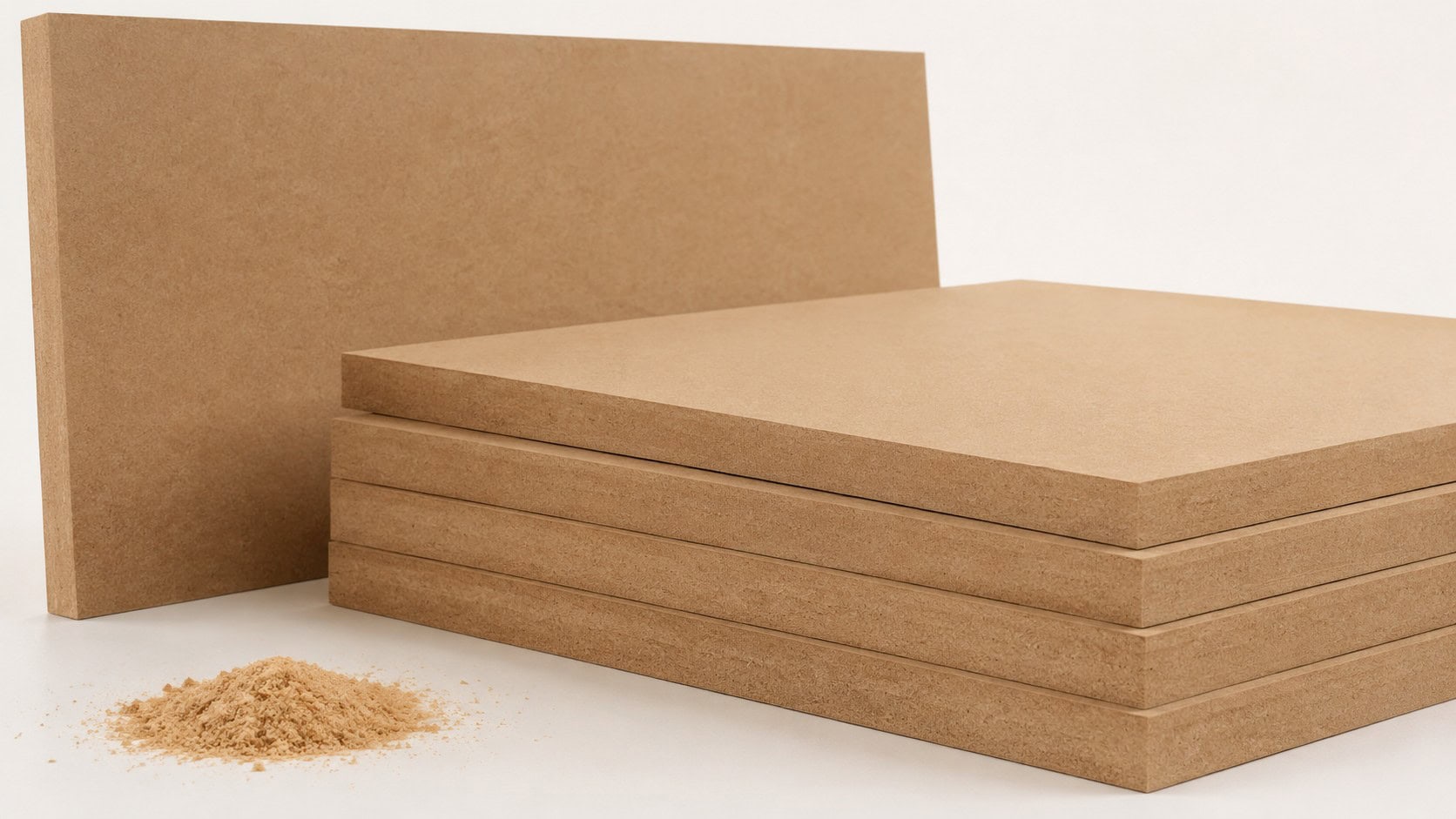
This makes MDF a strong option for seamless doors that will be painted to match the wall. It is also suitable for CNC-cut lines, fluted details, and other decorative patterns.
The main benefits include:
- Smooth surface for painting
- Consistent thickness
- Good dimensional stability in dry interiors
- Easy machining and routing
- Lower cost than many natural wood materials
MDF is commonly used for bedrooms, living rooms, closets, and home offices.
However, standard MDF can absorb moisture through unsealed surfaces and edges. This may cause swelling. If you plan to use it near a bathroom, kitchen, or laundry area, choose a suitable moisture-resistant grade and seal all faces and edges correctly.
You can see a practical MDF-based construction in Tengyu’s MDF K-Style Wooden Sliding Barn Door with PVC Film. It combines MDF and fir with a protective PVC-film surface for residential interiors.
HDF: Best When You Need Greater Density
High-density fiberboard, or HDF, is made through a similar process to MDF. However, it is compressed to a higher density.
HDF can provide a harder surface and better resistance to dents. It may also offer better fastening strength in a properly designed door construction. This makes it useful for frequently operated doors or panels with detailed machining.
Its higher density also means more weight. A heavy seamless sliding door needs hardware with enough load capacity. You must calculate the weight of the complete panel, including the finish, handle, edge strips, and other accessories.
HDF is a good choice when you need:
- A dense and smooth substrate
- Fine routed details
- Greater surface hardness
- A thin but relatively rigid panel layer
- A durable base for laminate or veneer
HDF quality and moisture performance vary by grade. Do not assume that every HDF panel is suitable for humid conditions. Check the technical specification before ordering.
Veneer: Best for a Natural Wood Appearance
Wood veneer is a thin layer of real wood applied over MDF, HDF, plywood, or another stable substrate.
It gives you the grain and color of natural wood while reducing the movement and cost associated with a thick solid-wood panel. Veneer is ideal for premium residences, hotel interiors, offices, and feature walls.
For a seamless effect, you can continue the same veneer across the wall and door panel. Careful grain matching makes the opening less noticeable.
Veneer offers several advantages:
- Authentic wood appearance
- Wide choice of wood species
- Lower material use than solid wood
- Suitable for continuous wall-panel designs
- Premium feel without a fully solid-wood construction
Natural variation is part of the appearance. Each sheet may have a slightly different grain or color. If you need several matching doors, approve the veneer layout before production.
Veneer also needs a suitable protective coating. Sunlight, humidity, and cleaning chemicals can change its appearance over time.
Tengyu’s Cherry Wood Veneer Sliding Barn Door demonstrates how veneer can add natural texture and warmth to an engineered door construction.
HPL: Best for Busy and Humid Interiors
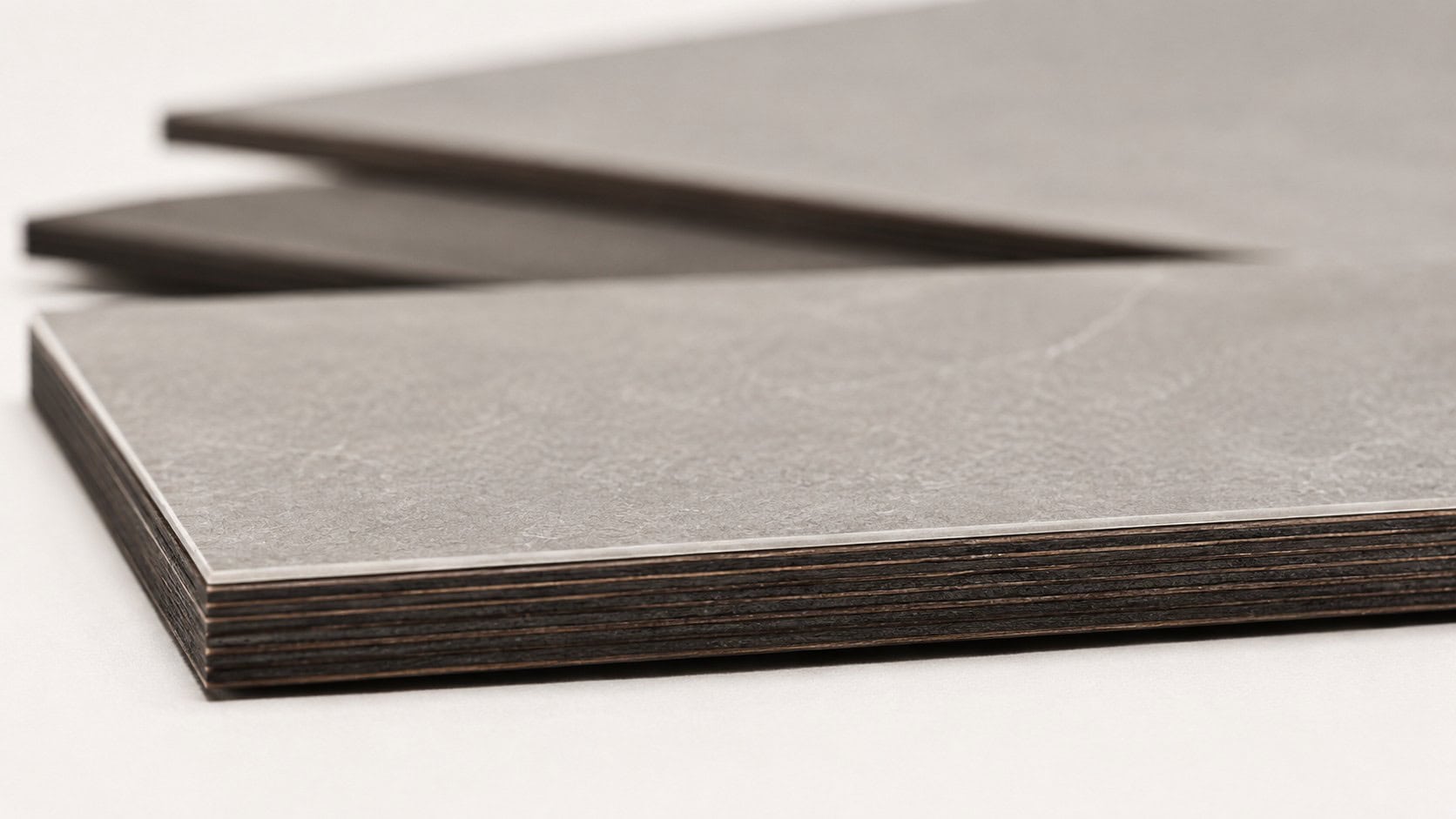
High-pressure laminate, or HPL, is produced by pressing layers of resin-treated paper under high heat and pressure. A decorative surface gives it the desired color, pattern, or texture.
HPL is valued for its durable and easy-to-clean surface. It is often used in apartments, kitchens, bathrooms, hotels, offices, and other busy interiors.
Its key advantages include:
- Good resistance to scratches and stains
- Easy cleaning
- Consistent colors and patterns
- Wide range of decorative finishes
- Better surface moisture resistance than painted MDF
- Suitability for high-use interiors
HPL can imitate wood, stone, concrete, metal, or solid colors. This gives you many options for matching a door with wall panels or cabinets.
However, HPL does not make the entire door waterproof. Water can still enter through joints, damaged areas, or unsealed edges. The substrate and edge treatment must also suit the installation environment.
For bathroom applications, you can review Tengyu’s Top-Mounting Bathroom Entry Door with HPL Door Panel.
| Material | Typical Role | Main Strength | Main Limitation | Best Applications |
| MDF | Substrate or panel | Smooth and easy to paint | Standard grades can swell when wet | Bedrooms, living rooms, offices |
| HDF | Dense substrate | Hard surface and fine machining | Heavier and usually more expensive | High-use interior doors |
| Veneer | Natural wood finish | Authentic grain and premium appearance | Needs careful matching and coating | Villas, hotels, executive offices |
| HPL | Decorative protective finish | Durable and easy to clean | Edges and substrate still need protection | Kitchens, bathrooms, commercial interiors |
How Should You Select a Material for Your Seamless Door?
Match the Material to the Room
For a dry living room or bedroom, painted MDF often provides the best balance of appearance, cost, and customization.
Choose veneer if you want the door to disappear into a natural wood feature wall. It works especially well with vertical slats or large wall panels.
For a busy kitchen, laundry room, or commercial interior, HPL may be more practical. Its surface is easier to clean and more resistant to everyday wear.
HDF can be suitable when you need a harder, denser panel. However, its added weight must be considered during hardware selection.
Consider the Complete Door Weight
A seamless door may include several layers:
- Core construction
- MDF or HDF facing
- Veneer, HPL, mirror, or decorative panel
- Adhesive
- Edge strips
- Handle or lock
- Reinforcement for hardware
Ask your supplier to confirm the finished weight, not only the weight of the basic door slab.
Coordinate the Door and Wall Finish
Material selection alone does not create a seamless door. The door must also align with the surrounding wall.
For painted surfaces, use the same paint system and application method. Different primers or roller textures may create a visible color change.
For veneer, align the grain direction and sheet layout. For HPL, confirm that the panel joints, patterns, and surface sheen remain consistent.
You should also plan:
- Perimeter gap size
- Door thickness
- Wall flatness
- Recessed handle position
- Sliding clearance
- Edge finish
- Moisture exposure
- Hardware access
If the door slides outside the wall, confirm that the decorative panel will not hit switches, handles, furniture, or wall lights.
Balance Appearance With Maintenance
A highly concealed design is not always the easiest to service. Rollers, soft-close units, guides, and stops may need adjustment after installation.
Make sure your installer can access important hardware without damaging the decorative wall surface. This is especially important for hotel rooms, apartments, and other high-use projects.
Build the Right Seamless Door System with Tengyu
The right seamless door requires more than choosing a decorative surface. The panel construction, finish, weight, hardware, and installation details must work as one system. Tengyu supplies interior doors, concealed sliding tracks, pocket door systems, and related accessories for residential and commercial projects.
Contact Tengyu today with your drawings, preferred material, door dimensions, finished weight, and order quantity. Our team will help you develop a practical seamless door solution that meets your design and performance requirements.
Frequently Asked Questions
Is MDF or HDF Better for a Seamless Door?
MDF is usually the better choice for a cost-effective painted door. HDF may be better when you need greater density, surface hardness, or fine machining. Your decision should also consider weight and moisture exposure.
Can You Apply Veneer or HPL Over MDF?
Yes. MDF is commonly used as a substrate for veneer and HPL. The panel must be properly prepared, and the construction should remain balanced to reduce the risk of warping.
Is HPL Waterproof?
HPL provides good surface moisture resistance, but the complete door is not automatically waterproof. The substrate, joints, and edges must also be protected.
Which Material Creates the Most Natural Appearance?
Real wood veneer provides the most authentic wood grain. You can match the veneer across the door and wall for a continuous design.
Which Material Is Easiest to Paint?
MDF is generally the easiest option because it has a smooth and uniform surface. Seal the edges carefully because they may absorb more primer and paint than the door face.
Can These Materials Be Used With Concealed Sliding Hardware?
Yes, provided that the finished door thickness and weight match the hardware specifications. Decorative layers must also have enough clearance from the wall.
What Information Should You Send to Your Door Supplier?
Provide the door dimensions, core material, surface finish, finished weight, wall type, opening method, application, and required quantity. Include drawings and finish samples when possible.