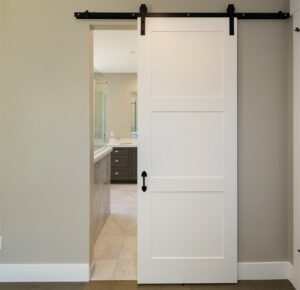

The key to hanging barn doors successfully is proper preparation, including choosing the right hardware and making sure your wall can support the weight. You’ll need to measure carefully, find the wall studs, and mount a solid backing board before attaching the track. Once the track is secure, hanging the actual door is the easy part.
This guide walks you through everything from picking your door and hardware to the final adjustments that make your barn door glide smoothly.
Picking the Right Barn Door and Hardware
Getting the door and hardware right means thinking about style, weight, and how the door will actually move in your space.
Different Types of Barn Doors
Solid wood doors give you that classic rustic look but they’re heavy and need strong hardware. Hollow core doors are lighter and cost less, which makes them easier to install.
Glass-paneled barn doors work great if you want natural light to flow between rooms. Reclaimed wood brings character and a vintage feel. Modern homes often use sleek metal or frosted glass options.
The weight of your door matters a lot. Heavier doors need more durable rollers and stronger wall anchors to stay safe and work smoothly.
Selecting the Best Barn Door Hardware Kit
A barn door hardware kit includes the track, rollers, stoppers, and mounting screws you need. Look for kits that match your door’s weight rating.
You’ll find top-mount and face-mount options. Soft-close features prevent slamming and add a nicer feel. Anti-jump disks keep the door from lifting off the track during use.
Single vs. Double Barn Door Options
Single barn doors work well for standard doorways and small spaces. Double barn doors split in the middle and slide apart, making them perfect for wide openings like closets or room dividers.
Preparing for Barn Door Installation
Getting your space ready before you install a barn door saves time and helps avoid mistakes. You’ll need accurate measurements, the right tools, and a properly prepared wall.
Measuring Door and Wall Space
Start by measuring the doorway opening width and height. Your barn door should be at least 2 inches wider than the opening on each side to ensure proper coverage when closed.
Next, measure the wall space above the doorway. The barn door track needs about 6 inches of clearance above the door frame for mounting. Check that you have enough wall width for the track, which should extend beyond the door opening on at least one side. Mark where the door will sit when open to make sure it won’t block outlets, light switches, or artwork.
Write down all measurements twice to confirm accuracy.
Gathering Essential Tools and Materials
You’ll need a drill with bits, level, measuring tape, pencil, and stud finder. Get a wrench or socket set for tightening hardware.
Your barn door kit should include the track, rollers, door guides, and mounting brackets. Buy wood screws rated for your wall type and door weight.
Prepping the Wall and Doorway
Use your stud finder to locate wall studs where you’ll mount the track. Mark each stud location with a pencil.
Remove the existing door, hinges, and trim if present. Fill old screw holes with wood filler and let dry.
How to Hang Barn Doors: Step-by-Step Process
The key to a successful barn door installation is mounting the board securely, attaching the track properly, installing the rollers and safety hardware, and hanging the door with a floor guide for smooth operation.
Installing the Mounting Board
You need a solid mounting board to support your sliding barn door’s weight. Start by locating the wall studs above your doorway using a stud finder.
Cut a piece of lumber that’s at least 1 inch thick and 6 inches wider than your door. This board will hold the barn door track. Mark the stud locations on the board before mounting it.
Drill pilot holes through the board at each stud location. Hold the board level against the wall and secure it with 3-inch wood screws driven directly into the studs. Double-check that the board is level before tightening all screws completely.
Attaching the Barn Door Track to the Wall
Your barn door hardware kit includes the track that allows smooth sliding. Place the track on top of the mounting board and center it so there’s equal overhang on both sides.
Mark the screw holes through the track onto the mounting board. Some tracks have multiple hole options, so choose holes that align with your board’s center. Drill small pilot holes at these marks to prevent wood splitting.
Attach the track using the provided screws from your kit. Tighten them firmly but don’t overtighten, as this can bend the track. Run your hand along the track to make sure it feels smooth and straight.
Securing the Rollers, Door Stoppers, and Anti-Jump Disks
Attach the roller hardware to the top of your barn door. Most barn door hardware kits include brackets that screw into the door’s top edge. Space them according to your kit’s instructions, usually 2-4 inches from each edge.
Hang the door on the track by lifting it up and sliding the rollers into the track channel. Adjust the rollers until the door hangs straight and level.
Install door stoppers at both ends of the track to prevent the door from sliding off. Position anti-jump disks on the track between the rollers to keep the door from lifting off during use.
Mounting the Floor Guide and Hanging the Door
The floor guide keeps your door stable and prevents it from swinging. Close the door to its final position and mark where the bottom edge sits on the floor.
Install the floor guide at this location using the screws provided. The guide should allow the door to slide smoothly while keeping it from swinging away from the wall. Some guides adjust for different door thicknesses.
Test your door by sliding it back and forth several times. Make any needed adjustments to the rollers or guide to ensure smooth movement without scraping or sticking.
Finishing Touches and Maintenance Tips
After installing your barn doors, a few final checks and regular care will keep them working smoothly for years to come.
Testing Door Movement and Adjustments
Slide your barn doors back and forth several times to check for smooth movement. The door should glide easily without sticking or making loud noises. If it feels rough, clean the track to remove any dust or debris.
Check if the door hangs straight by closing it completely. A level placed against the side will show if adjustments are needed. You can raise or lower the door by adjusting the roller hardware at the top.
Test the floor guide to make sure the door stays stable as it moves. The guide should keep the bottom of the door from swinging without creating friction. Tighten any loose screws on the track, rollers, or door stops.
Maintaining Your Barn Doors Over Time
Wipe down the track once a month with a dry cloth to remove dust buildup. Clean rollers prevent grinding sounds and help your barn doors slide better.
Check all mounting screws every few months to make sure they stay tight. Apply a silicone-based lubricant to the rollers twice a year to reduce friction and noise.
Inspect the floor guide for wear and replace it if it cracks or loosens.
Contact Us & Request a Quote
Visit our product inquiry page to fill out a contact form. Please provide your company details and any specific file uploads (like floor plans or sketches) to help us provide an accurate estimate.
Frequently Asked Questions
What tools and materials do I need?
How do I securely hang the door?
Measure the opening and mount the track rail level above it, securing it into wall studs. Fix roller hangers to the top of the door. Lift the door onto the track, then install end stoppers and the floor guide.
How should I choose the right hardware?
How can I ensure smooth and even sliding?
The track must be perfectly level to prevent the door from drifting. Maintain a 1/4 inch clearance from the floor and use a sliding door guide to prevent wobbling or swinging.
What safety precautions are necessary?
What are the required measurements and clearances?
The door should be 2-4 inches wider and 1-4 inches taller than the opening. Ensure you have sufficient wall space beside the opening for the door to slide fully open and enough vertical clearance for the rail system.