
Bifold doors come in many sizes to fit different spaces. While standard dimensions (typically 24-36 inches wide per panel, 80 inches high) exist as a starting point, the key is choosing the right bifold door size is accurately measuring the opening so the door fits and works smoothly, with room for small adjustments in width and height.
This guide discusses the size terminology to help you take accurate measurements and avoid common pitfalls.
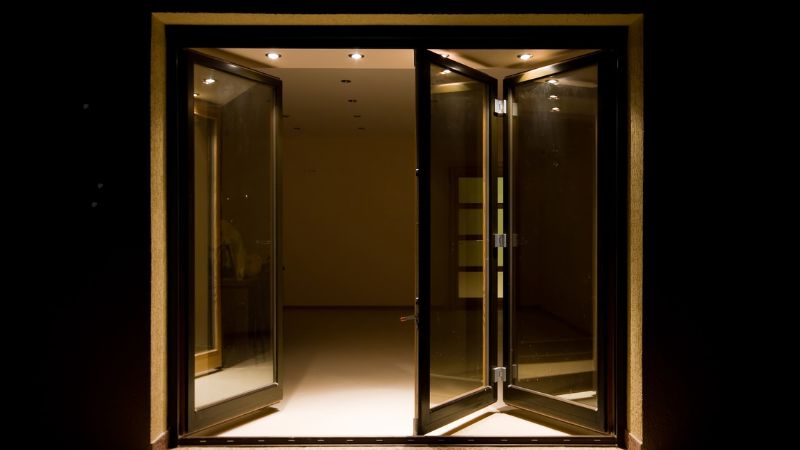
Understanding Nominal And Actual Sizes: Definition And Difference
To avoid ordering doors that don’t fit, you must first understand a critical industry convention: the difference between nominal and actual sizes.
The nominal size is what you see on the product label or in the store. It’s a rounded measurement, like 30 inches wide or 80 inches tall.
The actual size is the real measurement of the door panels, and it is usually a little smaller than the nominal size. For example, a nominal 36-inch bifold door often measures about 35 inches wide. This reduction lets the door fit smoothly in its frame.
| Measurement Type | What It Means | Example (Width) |
|---|---|---|
| Nominal Size | Labeled or standard size | 36 inches |
| Actual Size | Real door panel size | About 35 inches |
When measuring for a bifold door, focus on the rough opening—the space the door will fit into—rather than only the nominal size. Knowing this can save time during installation and help the door fit well.
Standard Bifold Door Sizes: For Residential And Commercial Use
Bifold doors come in sizes for different spaces and uses. They fit standard openings but also allow for custom dimensions. Knowing typical widths, heights, and panel counts helps you choose the right door.
Residential Standard Sizes
Residential bifold doors usually range from 24 to 36 inches wide per panel, with heights between 78 and 80 inches. These sizes fit most closets, pantries, or laundry rooms.
Most doors have 2-4 panels, each about 12 to 18 inches wide, folding neatly when opened. For example, a 48-inch opening might use two 24-inch panels or four 12-inch panels.
Height options often match standard door heights (80 inches), but custom heights are available for taller spaces. Measure the rough opening and consider the track system for a proper fit.
Commercial Standard Sizes
Commercial bifold doors are larger and made for heavier use. Standard widths start from about 36 inches and can go up to 96 inches or more in single-door setups.
Heights often range from 84 to 96 inches, sometimes taller, to fit higher ceilings in offices or stores. Panels are wider, making access easier.
Commercial doors often use stronger materials like aluminum or steel. Many designs focus on accessibility and meeting fire codes, so correct sizing is important.
Specialty Sizes
Some bifold doors are made for special needs and unique spaces. Specialty doors may be over 16 feet wide for large patios or even more than 40 feet in commercial or custom homes.
Panel widths can range from 18 inches to over 36 inches, depending on the design. Heights can be customized, sometimes taller than 96 inches.
Specialty sizes usually require custom fabrication and expert installation. They offer flexibility for unusual openings while saving space.
How To Measure Bifold Doors: Step-By-Step Guide
You need to check the rough and finished openings, allow space for hardware, and confirm the panel layout.
Tools You’ll Need
Measure from the same points each time for accuracy. The right tools make the job easier and help avoid mistakes.
- Tape measure (steel, at least 25ft for accuracy).
- Level (to check if the opening is plumb/level).
- Pencil and paper (or digital note-taking tool).
- Calculator (for multi-panel measurements).
Step-By-Step Guide
Step 1: Measure The Rough Opening (Before Frame Installation)
Measure the width and height of the rough opening (the structural wall gap) at multiple points, using the smallest measurement of each to ensure the door will fit even if the framing is uneven.
Step 2: Measure The Finished Opening (After Frame Installation)
If a frame is already installed, measure the finished opening’s interior width and height; this is the critical dimension for ordering doors, as it accounts for the frame itself and is smaller than the rough opening.
Step 3: Account For Hardware And Clearance
To ensure smooth operation, add a clearance allowance of 1/8 to 1/4 inch to both the width and height measurements to accommodate track hardware, hinges, and folding space.
Step 4: Verify Panel Configuration
Verify your panel configuration by dividing the total door width by the number of panels, and confirm that the resulting panel widths are compatible with your chosen hardware and fold neatly.
Common Mistakes And How To Avoid Them
A common mistake is inaccurate measurements of the door opening. Measuring only one spot can lead to doors that don’t fit if the frame is uneven. Measure at several points for a better fit and to avoid extra work later.
Another mistake is choosing a door that is too tight for the opening. Bifold doors need a small gap—about 1/8 inch—to move smoothly. Without this, doors can stick or get damaged.
Misaligned tracks also cause problems. If the tracks aren’t level or secured, the doors won’t glide well. Take time to align the tracks during installation.
Skipping final adjustments, like tightening screws and adjusting hinges, can cause doors not to close fully or rub the frame. These small steps help the door work better and last longer.
- Single-point measurements
- Not enough clearance between door and frame
- Uneven or loose tracks
- Ignoring hinge and alignment adjustments
Regular maintenance, like cleaning tracks and oiling hinges, keeps bifold doors working well and lasting longer.
How To Choose Bifold Doors: Sizing + Other Key Factors
Choosing the right bifold door means more than matching the width and height to an opening. You also need to think about how the door will work in the space, and pick materials and thickness that fit your needs and style.
Match Size To The Opening
Accurate measurements are critical. The bifold door should be a bit smaller than the rough opening to allow space for clearance and hinges. Usually, subtract about ¼ inch (6 mm) from both the height and width for a good fit.
Measure height and width at several points to allow for uneven walls or floors. Make sure the floor is level, or adjust the door size for uneven thresholds. In closets or laundry rooms, less clearance may be needed than for patio or outside doors.
Double-check panel widths and the number of panels. The size and count affect how the door folds and slides, so choose based on your space and how much of the opening you want visible when open.
Consider Functionality
Functionality should drive your choice. For closet doors, smooth gliding is important, so lightweight panels and good tracks help.
If maximizing opening width is key, consider the fold-back stack of multi-panel designs.
For exterior applications, factor in weather resistance and insulation, which may influence material choice and required clearance for seals.
Material + Thickness
Bifold doors are made from wood, aluminum, vinyl, or composite blends. Each material affects weight and durability. Thicker doors insulate better and are sturdier, but need stronger hinges and tracks, which can change the frame size needed.
Wood doors expand and contract with humidity, so leave extra clearance. Aluminum is more stable but may need thermal breaks for energy savings.
Typical door panel thickness ranges from 1 ⅜ inches to 1 ¾ inches. Thinner panels are lighter and easier to install, but may not last as long. Pick material and thickness based on location (inside or outside) and how long you want the door to last.
Conclusion
By understanding size standards, meticulously measuring your opening, and accounting for functional needs, you can confidently select bifold doors that fit perfectly and operate flawlessly for years. Remember this core principle: the door must be slightly smaller than the rough opening.
A simple checklist for sizing bifold doors:
- Measure opening width at three points
- Measure opening height at three points
- Deduct sizing allowance for smooth operation
- Choose panel size based on door width and style
- Confirm rough opening size matches door size
Time to act!
Now that you’ve mastered the measurements and key factors for choosing bifold doors, the next step is to find the perfect match for your space.
Discover Tengyu
Tengyu excels by providing a holistic approach to door systems. Instead of just selling a door or a piece of hardware, we offer complete, well-engineered solutions where every component is designed to work together seamlessly.
Explore Our Products
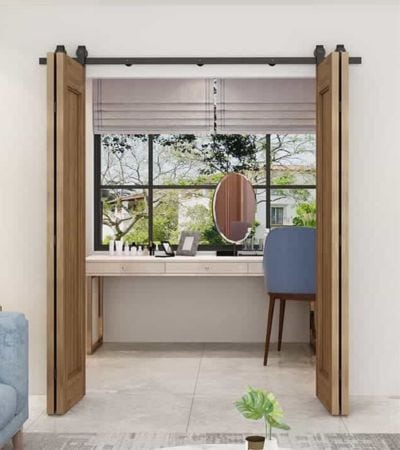
- Sliding Folding Bifold Barn Door Hardware
- Bifold Sliding Door Hardware Set Track 1100mm for 2 Doors
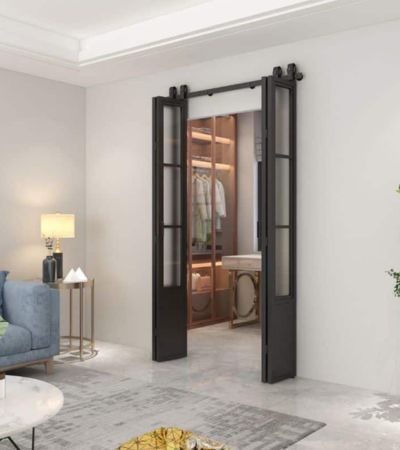
- 48x84in Bifold Sliding Barn Door Kit, 3-Lite with Frosted Glass, Black Finish, Hardware Included
- 48″ x 84″ Bifold Sliding Barn Door with Frosted Glass – Water-Proof & Scratch-Resistant
Ready to decide your options? Visit our official website to browse our complete collection of bifold doors. Contacting us to request a custom quote or get expert advice tailored to your project.